The Innovation Puzzle


Key Takeaways
- Innovation requires balancing exploration and exploitation: Societies and institutions must adapt to both generate new ideas and effectively implement them to achieve sustained technological progress
- AI's disruption is gradual, not instantaneous: While AI is transformative, its full impact on industries, especially financial services, will unfold over years, necessitating trust, guardrails and adaptable institutions
- AI enables strategic investment and friction reduction: Venture capital identifies and integrates AI to lower barriers to entry, drive productivity and reduce operational friction across financial services
In this episode of the Citi Institute podcast, host Alex Miller is joined by Arvind Purushotham, Head of Citi Ventures, and Professor Carl-Benedikt Frey, DSF Associate Professor of AI & Work and Oxford Martin Citi Fellow.
Together, they explore the profound impact of AI and disruptive innovation on societies, economies, and institutions—and why imagination and human creativity remain essential drivers of progress, even as technology accelerates.
Arvind Purushotham explains how Citi identifies and invests in startups to bring innovative technologies into financial services, highlighting the critical role of trust and adoption in scaling AI and frontier technologies.
Professor Carl-Benedikt Frey discusses the distinction between exploration and exploitation in innovation, and why different institutions are better suited to each.
Together, they reflect on why disruptive innovation is rarely instantaneous, but instead unfolds gradually over time.
Citigroup, (Citi), and Oxford Martin School are not affiliated and are independent from each other. The speakers’ views are their own and may not necessarily reflect the views of Citi or any of its affiliates. All opinions are subject to change without notice. Neither the information provided nor any opinion expressed constitutes a solicitation for the purchase or sale of any security. The expressions of opinion are not intended to be a forecast of future events or a guarantee of future results.
Professor Carl-Benedikt Frey, DSF Associate Professor of AI & Work and Oxford Martin Citi Fellow
Carl-Benedikt Frey is the Dieter Schwarz Associate Professor of AI & Work at the Oxford Internet Institute and a Fellow of Mansfield College, University of Oxford. He is also Director of the Future of Work Programme and Oxford Martin Citi Fellow at the Oxford Martin School.
After studying economics, history, and management at Lund University, Frey completed his PhD at the Max Planck Institute for Innovation and Competition in 2011. He subsequently joined the Oxford Martin School where he founded the programme on the Future of Work. Between 2012 and 2014, he was teaching at the Department of Economic History at Lund University.
In 2012, Frey became an Economics Associate of Nuffield College and Senior Fellow at the Institute for New Economic Thinking, both University of Oxford. He remains an Associate Fellow of the Department of Economic History at Lund University, and a Fellow of the Royal Society of Arts. In 2019, he joined the World Economic Forum’s Global Future Council on the New Economic Agenda, as well as the Bretton Woods Committee. And between 2020 and 2022, he was a member of the Global Partnership on Artificial Intelligence (GPAI) – a multistakeholder initiative to guide the responsible development and use of AI, hosted by the OECD.
In 2013, Frey co-authored The Future of Employment: How Susceptible Are Jobs to Computerization. With over 12,000 citations, the study’s methodology has been used by President Barack Obama’s Council of Economic Advisors, the Bank of England, the World Bank, as well as the popular automation risk-prediction tool of the BBC. In 2019, the paper also featured on the Last Week Tonight Show with John Oliver.
Frey has served as an advisor and consultant to international organisations, think tanks, government, and business, including the G20, the OECD, the European Commission, the United Nations, and several Fortune 500 companies. He is also an op-ed contributor to the Financial Times, Foreign Affairs, Scientific American, and the Wall Street Journal, where he has written on the economics of artificial intelligence, the history of technology, the future of cities, and remote work.
His academic work has featured in over 100 media outlets, including The Economist, New York Times, Time Magazine, The New Yorker, Le Monde, and Frankfurter Allgemeine Zeitung. In addition, he has frequently appeared international broadcast media such as CNN, BBC, PBS News Hour, Al Jazeera, and Sky News.
His most recent book “How Progress Ends: Technology, Innovation, and the Fate of Nations” was shortlisted for the Financial Times and Schroders Business Book of the Year Award in 2025. His previous book, “The Technology Trap: Capital, Labor, and Power in the Age of Automation”, was selected a Financial Times Best Books of the Year in 2019, when it also won Princeton University’s prestigious Richard A. Lester Prize.

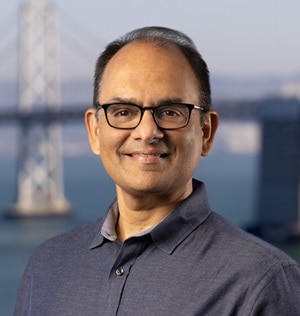
Arvind Purushotham, Head of Citi Ventures
Arvind Purushotham is the Global Head of Citi Ventures. He leads the team’s efforts to catalyze innovation and accelerate growth across Citi by bringing the outside in, convening stakeholders, helping build new capabilities, and delivering thought leadership throughout both the bank and the finance and tech ecosystems.
Arvind oversees all of Citi Ventures’ investing activities and partners with both Citi colleagues and leading startups to bring cutting-edge technologies and capabilities to Citi’s businesses and functions. In addition, he advises the Citi Impact Fund, which invests in "double bottom line" U.S.-based private sector companies that are helping address some of society's most pressing challenges.
Prior to Citi, Arvind spent nearly a decade as a Managing Director at Menlo Ventures, where he was an investor and Board member at companies including Kazeon Systems, Cavium Networks, Solidcore, nCircle Network Security, Intelligent Results, and Vhayu Technologies. Previously, Arvind was a design engineer and a Program Manager at Intel Corporation.
Arvind obtained his BSEE from the Indian Institute of Technology, Madras, an MSEE from Case Western Reserve University, and an MBA with Distinction from Harvard Business School. He enjoys running, photography, and reading in his spare time. Arvind is passionate about golf—a passion, sadly, that his skill level does not match. He lives in Palo Alto, CA with his wife, two sons, and their black lab Rocky.