
How Programmable Money Will Redefine Compliance and Control

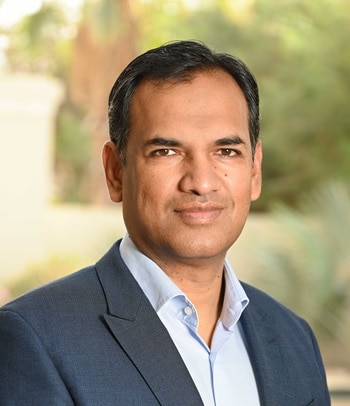
Ronit Ghose, Head of Future of Finance. Citi Institute |
The story of digital money is evolving fast. The first wave—defined by blockchain’s promise of instant, low-cost settlement—transformed how money moves.
The next phase takes us further. Programmable money introduces intelligence into transactions—digital value that executes automatically under set conditions, reconciles in real time, and embeds compliance rules from the start.
As we explore in the Citi Institute report, Stablecoins 2030: Web3 to Wall Street, the real breakthrough lies in the shift from real-time movement to real-time intelligence—a world where transactions move instantly and intelligently, with auditability, control, and trust built directly into the flow of funds.
Beyond Speed: The Real Value of Programmability
Both stablecoins and bank tokens deliver speed, efficiency, and lower transaction costs. Yet programmability represents a deeper change: conditional logic becomes intrinsic to money itself. Instead of reconciling payments after they clear, treasury and compliance teams can write the rules directly into each transaction.
In our report, we show how programmability enables real-time reconciliation and settlement across subsidiaries and markets. Corporate treasuries increasingly want “compliance embedded at the point of transaction,” reducing friction and manual intervention. Together, these innovations point to what we describe as the move toward “smarter, faster finance.”
Picture a cross-border supplier payment that releases automatically once goods clear customs, or an intercompany transfer that reconciles across ledgers in multiple time zones. What used to be a chain of disconnected workflows becomes a single, seamless, conditional transaction. Programmability accelerates finance while reducing risk.
Built-In Compliance: Why Institutions Care
Most large corporates can already move money in real time, at relatively low cost using traditional rails. What they still need is confidence—a system that provides trust, auditability, and control. Programmable money can deliver all three by embedding compliance directly into the transaction layer.
This means fewer manual checks, fewer reconciliations, and more automated validation of every payment condition. Each transaction becomes its own audit trail—verifying counterparties, regulatory thresholds, and policy limits before execution.
The effect is transformative. Compliance moves from a reactive, after-the-fact process to a proactive, always-on safeguard. For regulated institutions, it even helps meet supervisory expectations for traceability and control—without adding new friction or bureaucracy. Oversight shifts to the source, where the data originate.
Use-Case Spotlight: Treasury Operations in Real Time
No function stands to gain more than corporate treasury. Today, treasurers manage liquidity across time zones and entities, often by manual coordination. Programmable money changes that dynamic by turning conditionality into code.
As detailed in Stablecoins 2030, programmable payments can transform treasury through:
- Conditional payments: settlement triggered by delivery confirmation or milestone completion.
- Real-time liquidity optimization: automatic sweeps to where funds are most needed, across currencies or subsidiaries.
- Integrated compliance checks: regulatory and policy validation built into the transaction, before execution.
These features compress financial cycles. Receivables clear instantly; payables execute on time; payrolls and vendor settlements align automatically across regions. The outcome is greater transparency, lower working-capital drag, and stronger control—all without additional administrative overhead. Treasury evolves from a reporting center to a live control tower for global liquidity.
The Role of Banks: Trusted Programmability
For enterprises, the key question is no longer how fast money can move, but how safely. That’s where banks play a defining role.
Bank tokens (deposit tokens, tokenized deposits and similar) combine the trust and regulatory safeguards of traditional finance with the programmable capabilities of blockchain. They represent the convergence of security and automation—the bridge between established finance and the emerging digital economy.
Banks are uniquely positioned to offer what we call trusted programmability: digital money that carries embedded logic and the assurance of regulated deposits. They can integrate programmable capabilities into existing systems while maintaining capital, liquidity, and reporting standards.
Our analysis suggests that by 2030, transaction volumes for bank tokens could reach $100–$140 trillion, potentially surpassing stablecoins. That shift reflects enterprise demand for regulated compliant digital money—automation delivered with assurance.
We’re already seeing banks run programmable-token pilots—linking smart-contract triggers to treasury actions, automating cross-border settlement, and embedding rule-based approval flows. Each step brings us closer to a world where money and compliance operate in lockstep.
The Road Ahead: From Proof-of-Concept to Enterprise Adoption
Challenges remain: interoperability across chains and payment systems, data-privacy management, and accounting treatment are all works in progress. Yet momentum is unmistakable. Financial institutions and corporates are moving from proofs-of-concept to enterprise-grade pilots, often in collaboration with regulators designing digital-asset frameworks.
As these efforts scale, programmability will redefine compliance itself. Instead of post-transaction reporting and reconciliation, oversight becomes a live layer of the financial system—self-executing, traceable, and always on.
That marks a profound shift: from after-the-fact assurance to real-time confidence. It re-imagines trust in finance for the digital age.

Looking Forward
Programmable money represents the next stage in the evolution of finance—a system where intelligence, compliance, and control are built in from inception rather than added afterward.
Over the coming decade, as stablecoins and tokenized deposits mature, the focus will move toward trust and intelligence as the defining measures of progress. The financial system is evolving toward a model that is programmable by design, combining automation with the credibility of regulation.
To explore how this future is taking shape, read Citi Institute’s report, Stablecoins 2030: Web3 to Wall Street.