
The Rise and Rise of India - Growth Driven by Digitization
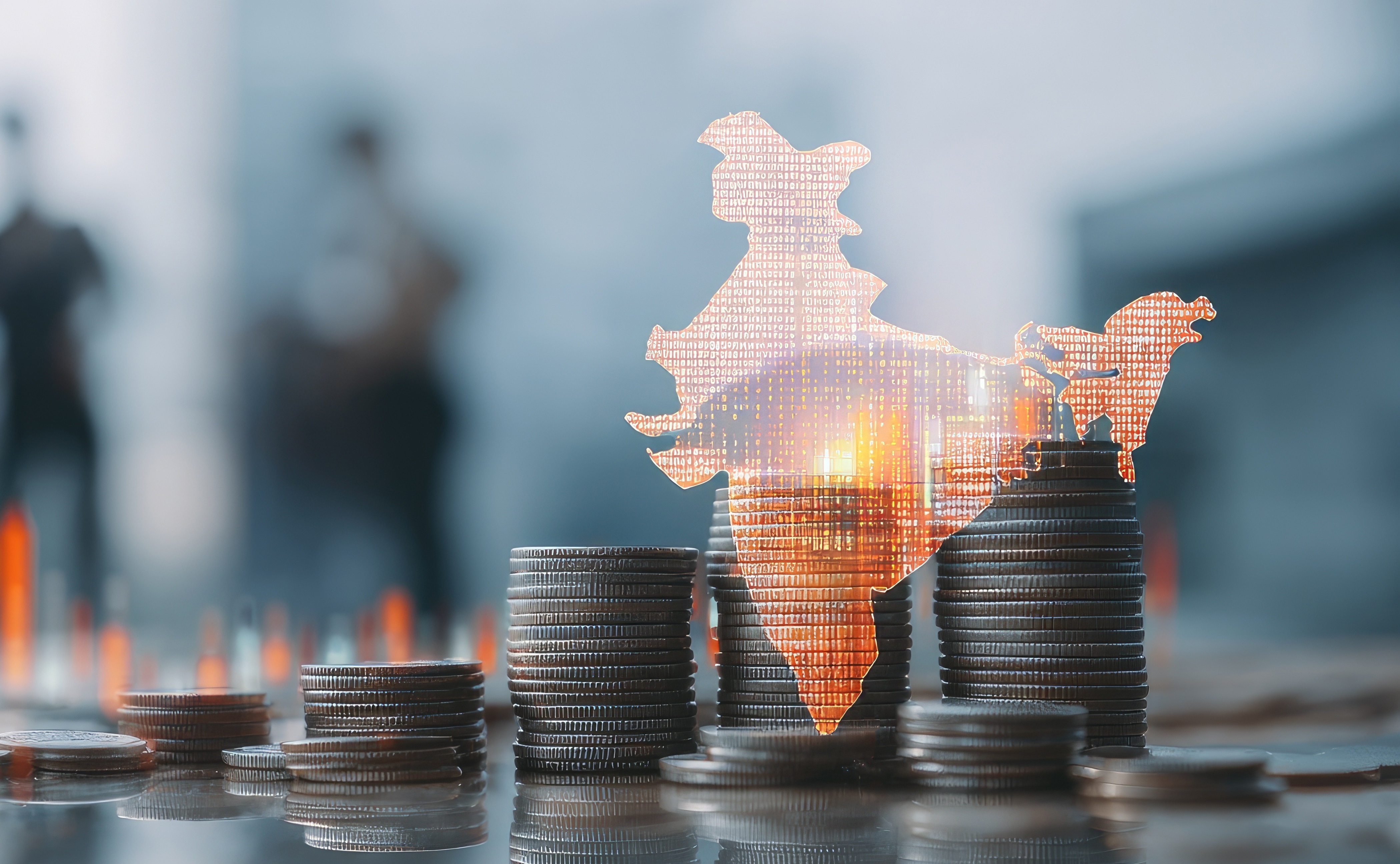
India has risen from the 13th largest economy by GDP in 2000 to fifth in 2025, with the International Monetary Fund estimating that it will overtake Japan in fourth place next year1. But what are the real engines driving this economic powerhouse? Citi Institute recently sat down with K. Balasubramanian, Citi’s India Country Officer and Head of Banking for the Indian sub-continent, for an insider’s perspective on the four pillars of India’s growth, its digital revolution, and how the country is navigating global challenges.
HIGHLIGHTS
- India's economy rapidly became the world's fifth-largest, driven by stable governance, a young workforce, digital payments, and vibrant capital markets supporting a booming startup ecosystem.
- India's unique open digital architecture, with 97% of payments now digital, has dramatically lowered business costs and spurred fintech innovation.
- India is proactively addressing global economic headwinds, including high trade tariffs, through domestic tax relief and strategic bilateral trade agreements.
From your perspective, what are the fundamental drivers behind India’s economic growth?
I see four broad pillars supporting this strong growth. First is a stable government that provides consistency in policy and a clear direction of travel. This stability, combined with a business-friendly and reform-focused agenda, makes India very appealing to global investors.
Second, India is a very young country, with an average age of around 26 or 27. This demographic is driving a massive consumption market, which accounts for about 60% of our GDP2. This internal consumption story remains strong regardless of what’s happening elsewhere in the world.
Third is the digital payments infrastructure created over a decade ago. This "rail" has been a game-changer, enabling immense financial intermediation and creating economic velocity.
Finally, our capital markets are incredibly vibrant with a market cap of nearly $5 trillion3 and 100-120 new companies listing every year. The country is also among the five largest startup ecosystems in the world4, creating a lot of economic energy.
Unlike many countries with closed or proprietary systems, India created an open digital architecture that encourages participation and innovation at every level.
You mentioned digital transformation. How is India’s unique approach to its digital infrastructure reshaping the country and the banking sector?
Unlike many countries with closed or proprietary systems, India created an open digital architecture that encourages participation and innovation at every level. The government built the foundational infrastructure, and private enterprises were invited to innovate on top of it. This has substantially reduced the cost of doing business.
The results are staggering. Today, 97% of payments in India are digital5. Compare that to the U.S., where 60% of payments are still physical checks. This digital backbone has fueled the growth of fintech companies, which, combined with available credit data, has made credit more accessible and boosted consumer spending.
What key policy and structural reforms is India undertaking to attract and sustain investment?
Manufacturing is a huge focus. Historically a services-led economy, the government is now determined to build a robust manufacturing ecosystem to create jobs for the one million people entering the workforce every month. As more countries pursue a "China plus one" manufacturing strategy, India is set to be a big beneficiary.
Another area is attracting global capability centers (GCCs). India is already home to about 1,700 of the 3,200 GCCs globally6, and these aren’t just back-office operations anymore. They are high-tech hubs for top-end research and development (R&D) and artificial intelligence. For example, the entire global R&D for Mercedes-Benz’s future cars is done in Pune.
These reforms are all tied to the government’s goal of making India a developed nation by 2047, its 100th year of independence, with a projected GDP of $25-27 trillion.
How can a global bank like Citi help channel the inflow of foreign capital needed to meet India’s investment goals?
The government’s substantial investment plan is unlikely to be covered by domestic savings, and will require an influx of foreign capital. International banks like Citi can play a meaningful role in mediating this capital, whether it is foreign direct investment into manufacturing or portfolio investments into financial markets.
The global economy is facing headwinds, including trade tariffs. How is India navigating these challenges?
It’s true, India has one of the highest tariff rates on a weighted average basis of around 42-43%. This is a potential curveball, as it can make our exports uncompetitive. The government is acutely aware of this and is managing it in two ways.
First, it is providing domestic relief, such as reducing consumption taxes to offset the negative impact on small and medium manufacturers. Second, and more strategically, it is signing a series of bilateral trade agreements with other countries and blocs, including the UK, Australia, and the European Union. This helps companies divert exports to markets where they can find new opportunities if the U.S. market becomes difficult. There is also work happening in the background on a new bilateral trade agreement with the U.S.
As a foreign bank, what is it like navigating India’s regulatory landscape? Is it a roadblock?
Frankly, no. From a regulatory perspective, we are treated exactly like a locally incorporated subsidiary. In fact, because of our size and market share, we are considered a “systemically important financial institution”.
Furthermore, the digital adoption in the country means there’s no longer a need for a massive physical footprint – a powerful presence requires no more than a few branches in key economic centers and a good digital ecosystem.
Foreign banks can’t just show up and expect to succeed. India is not a “one size fits all” market. You have to invest deeply, understand the nuances, and tailor your products.
1https://www.imf.org/external/datamapper/NGDPD@WEO/OEMDC/ADVEC/WEOWORLD
2https://www.theglobaleconomy.com/India/consumption_GDP/
3https://www.bseindia.com/markets/equity/EQReports/allindiamktcap.aspx
4https://www.startupblink.com/blog/top-countries-by-total-startup-output/
5https://www.rbi.org.in/Scripts/PublicationsView.aspx?id=23436
6https://www.indiatodayne.in/opinion/story/the-rise-of-global-capability-centers-gccs-in-india-a-2025-phenomenon