Where Can We Take You? Japan

KEY HIGHLIGHTS
This article highlights the following key developments in Japan's financial markets:
- A cautious and deliberate consideration of a T+1 settlement cycle for equities. While the transition is being explored, it is not expected in the near future and likely not before 2030, with significant challenges posed by time-zone differences and existing issues with late trade instructions
- Proposed adjustments to the clearing framework by the Japan Securities Clearing Corporation (JSCC). This would allow non-resident investors to clear over-the-counter (OTC) Japanese Government Bond (JGB) transactions for the first time, a major shift from the current domestic-only model
- Significant structural changes in the digital asset space, including potential tax reforms to apply a flat 20% rate on trading profits and new stablecoin regulations under the Payment Services Act, which impose stricter collateral requirements for issuers, effective June 2026
Overseas investors are once again flocking to Japan, attracted by the country’s stabilizing political outlook, interest rate normalization and ongoing commitment to corporate governance reform. As more global institutions pivot towards Japan, Marcello Topa, Head of Global Advocacy for Investor Services at Citi, talks to Jirawatana Chaitantipongse (Eddie), Japan Custody Head at Citi, about some of the post-trade reforms shaping the local market, in this latest edition of our “Where Can We Take You” series.
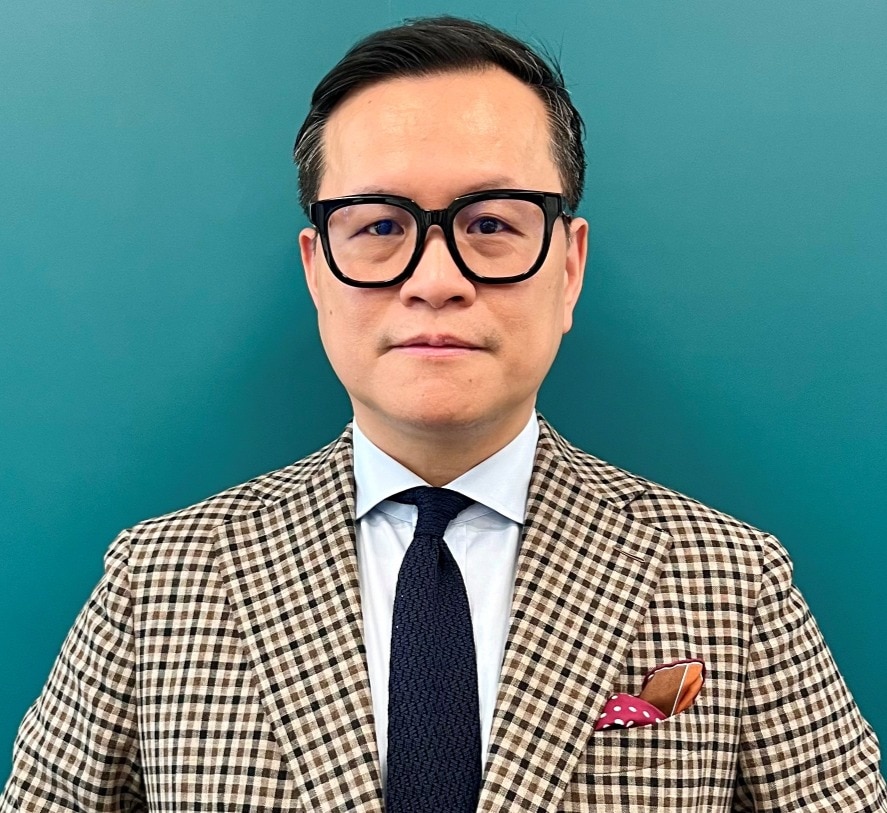
Marcello Topa |
Jirawatana Chaitantipongse |

Topa: As with many other markets, Japan is contemplating a transition to T+1. What is the latest update here?
Chaitantipongse: A move to T+1 for equities is currently being considered in Japan.
Over the last 12–18 months, Japan’s Financial Services Agency (JFSA), the Tokyo Stock Exchange (TSE), Japan Securities Depository Center (JASDEC) – the local Central Securities Depository (CSD) – and the Japan Securities Dealers Association (JSDA) have all been consulting with custodians, brokers and asset managers about potentially transitioning to a T+1 settlement cycle for equities.
Citi supports the industry’s exploration of a T+1 settlement cycle in Japan and has begun to assess the operational, liquidity, and risk management implications. The firm is engaging with regulators, FMIs, and market participants to contribute practical input on areas such as settlement cut‑off times, funding and FX processes, and post‑trade automation —areas that have been consistently highlighted as key considerations by market participants.
Although we anticipate Japan will eventually move to T+1, it will most likely not happen in the near future, and not before T+1 is adopted in Australia (expected to occur in 2030 once their CHESS migration is finalized).
Topa: What are some of the potential challenges to rolling out T+1 in Japan?
Chaitantipongse: While we firmly believe that a shorter settlement cycle will help reduce settlement and counterparty risk, and usher in collateral optimization and liquidity benefits, the appetite in Japan remains subdued. There are several reasons for this.
Firstly, the time-zone differences between Japan and other major markets will have a big impact on settlement completion rates. With less time to settle Japanese trades on behalf of, say, US clients, the risk of settlement failures will increase, leading to added costs.
Even in the current T+2 settlement cycle, 50% of trade fails in Japan occur because of late instructions, a problem that is only going to get worse once T+1 is adopted.1
This makes for continued opportunities to further automation and improve the split settlement model in the local market. In this split settlement model, onshore institutions match trades using proprietary messaging systems or email whilst foreign firms typically rely on Swift MT564 messages, creating reconciliation gaps and duplication.2
Topa: Let’s pivot away from trade settlements and talk a bit about clearing. Japan is also making adjustments to its clearing framework. Can you share an overview?
Chaitantipongse: The Japan Securities Clearing Corporation (JSCC) has proposed a framework that would allow non-resident investors to clear Japanese Government Bond (JGB) over-the-counter (OTC) transactions, e.g. cash and repos, indirectly through an agency clearing participant. This is a major shift, as JGB OTC clearing services were previously only available to domestic investors.
However, a few issues need to be ironed out first by the JSCC and the local industry before this proposal can become a reality. For example, repo obligations cannot be netted, leaving clearing members at risk of being saddled with punitive capital charges and this will need to be resolved.
Topa: Citi has a lot of experience with third-party clearing in Japan. Please share a bit of color on how we’ve supported clients in the past.
Chaitantipongse: Citi’s third-party clearing (TPC) service supports clearing and settlement of cash equities, across both exchange-traded and OTC transactions. Our TPC service handles everything from trade novation and margining to settlement and fail management at JSCC, saving clients from having to build these systems themselves.
Not only does this free up internal resources, but our TPC service helps clients mitigate costs associated with full CCP membership. Users are also able to obtain liquidity and collateral benefits, as our TPC service provides them with access to credit lines and default fund optimisation.
Topa: Japan is doubling down on digital assets. What is going on in this space locally?
Chaitantipongse: Japan’s digital asset market is going through some structural changes such as tax reforms, as the country looks to cement its credentials as a digital asset hub. Today, earnings derived from digital asset trading are counted as income tax at both an individual and company level. This can result in certain individuals, particularly high earners, being hit with tax surcharges of up to 55%.3 Industry discussions are underway regarding a revised framework that would apply a flat 20% tax rate to digital asset trading profits, aligning them more closely with the treatment of equities and bonds. Such an approach could simplify tax outcomes and improve consistency across different types of financial investments.
Topa: Stablecoin regulation is also an area of focus in Japan. Could you please elaborate on this?
Chaitantipongse: Stablecoins are a hot topic in Japan, and for good reason too – given the asset class’s astronomical growth potential. Citi, for example, anticipates that stablecoin issuances, in a base case scenario, could hit $1.9 trillion by 2030, fuelled by the recent changes in global policy.4
Local regulators are keen to promote best practices around stablecoins.
Since 2023, stablecoins have been regulated in Japan under the Payment Services Act, which among other things, stipulates that only licensed financial institutions – namely banks, trust companies and fund transfer service providers – can issue stablecoins, whilst those providing custody solutions must be registered with the JFSA.
In 2025, JFSA announced amendments to the Payment Services Act, tightening up the collateral eligibility criteria for stablecoin reserve assets. Under the new rules, scheduled to take effect in June 2026, eligible collateral will be limited to cash and demand deposits, JGBs, redeemable term deposits, and high grade foreign-issued bonds, while the total outstanding amount of those bonds cannot be less than 100 trillion JPY.5 Sensible regulations and robust controls are playing a key role in stimulating stablecoin demand in Japan.
Topa: Citi plays an integral role in supporting best practices in Japan. What are we doing in the local market and can you share some success stories?
Chaitantipongse: Client engagement and advocacy are at the heart of what Citi does.
We have facilitated and accompanied local FMI representatives to global financial centres such as London, Hong Kong, Singapore and Australia, providing them with valuable insights into industry transformations, such as operational modernization and settlement compression.
We also regularly conduct educational client seminars on Japanese market intricacies such as pledge rules, proxy voting processes, and JASDEC’s matching requirements.
Our advocacy efforts in Japan continues to drive meaningful change across the industry, which was recently illustrated by our resolution of consumption tax inconsistencies. One such change has been in the handling of consumption tax which non-resident investors are now exempted from across both transaction and custody services.
1 Broadridge – T+1 in Japan: Forging a new industry mode
2 Broadridge – T+1 in Japan: Forging a new industry mode
3 Nagashima Ohno & Tsunematsu – March 2026 – Japan’s 2026 Tax reform on Taxation of Crypto asset transactions and its implications for foreign investors
4 Citi - September 2025 – StableCoins 2030: Web3 to Wall Street
5 https://www.fsa.go.jp/news/r7/sonota/20260126/01.pdf