
Rethinking Hourly Work: How WorkWhile is Unlocking Flexibility and Financial Freedom

HIGHLIGHTS
- WorkWhile, a Citi Impact Fund portfolio company, is rethinking hourly work with its AI-powered flexible work platform, connecting over 1.2 million workers to shifts that match their skills, availability and financial needs
- The platform promotes financial freedom for hourly workers by providing flexible staffing solutions, real-time pay and access to benefits, enabling them to build savings and achieve economic mobility
- To date, the Citi Impact Fund has invested in 54 companies and allocated over $195MM in capital, continuing its focus on funding innovative solutions in the areas of financial resilience, social infrastructure, future of work and climate resilience
Hourly workers are the backbone of the U.S. economy, with more than half of the U.S. workforce earning hourly wages. Yet the systems that support them have long been outdated, and many workers’ experiences are often characterized by unpredictable scheduling, inconsistent pay and limited access to healthcare or financial tools. Traditional employment practices often fail to meet workers’ realities, contributing to the challenges facing the 67% of Americans who work paycheck-to-paycheck.
In 2019, California native Jarah Euston founded WorkWhile, a Citi Impact Fund portfolio company building technology to make hourly work more flexible. Through its AI-powered labor marketplace that supports more than 1.2 million workers nationwide, WorkWhile connects motivated workers to shifts that match their skills and availability, giving them the freedom to earn on their own terms1. The platform offers opportunities across multiple industries, including warehouse and logistics, last-mile delivery, hospitality, food production, events and more. It also provides crucial benefits like real-time pay, financial tools and access to healthcare services that enable workers to plan, save and thrive.
I spoke with Jarah to learn more about how her personal background inspired this mission, how WorkWhile is challenging traditional notions of employment and how AI is playing a pivotal role in creating opportunities for America’s frontline workforce.
Robin: Let's start by zooming out. Can you give us a sense of the gap you saw in the labor market that led you to start WorkWhile?
Jarah: WorkWhile was born out of my lived experience. I grew up in Fresno, California, the largest agricultural producing county in the U.S., where there’s no other major industry in town. If you’re not in farming or a professional services job, you’re likely working a frontline, hourly job. In high school, I worked a lot of those roles in both retail and fast-food restaurants, and it fueled my desire to help address the limitations and economic challenges that my fellow Fresnans face today. I started to think about what I could do with my skills and professional experience in tech and data in service to frontline workers.
When I spoke with hourly workers, a consistent problem emerged: scheduling. Workers repeatedly shared that if they had to miss work for any valid reason, they would lose their jobs. Such a system perpetuates cycles of turnover, which is detrimental to both workers and businesses. With this challenge in mind, we designed WorkWhile to address the fact that workers want flexibility and businesses want retention. The solution to scheduling challenges, we theorized, is simply an algorithm. We set out to use technology to build a marketplace where AI and machine learning could accurately predict and schedule qualified, reliable workers at scale.
Robin: What are the tangible impacts that you have seen for workers using WorkWhile? Can you provide us with an example?
Jarah: We’ve heard many worker success stories and have been inspired by the impact WorkWhile has had on their lives. Workers who have picked up extra shifts on WorkWhile have been able to pay off debt and make significant progress toward saving for a home, creating real financial freedom and economic mobility. That’s capital and equity they’re building to provide for their families. It’s incredibly powerful.
Since the COVID-19 pandemic, interest in flexible, fractional work has surged. Our philosophy at WorkWhile is that anytime someone wants to work, there are several businesses seeking labor. Our platform connects these motivated, reliable workers with available shifts, streamlining the process outside of traditional recruiting and interviewing cycles that can take weeks.
We’re also focused on expanding access to essential services. We partnered with a healthcare AI company called Curai to give workers free access to telehealth anytime at no cost. We asked WorkWhile users what they would have done without this offering, and 38% of respondents told us they would have gone to the emergency room, while another 30% would have done nothing or simply searched for their symptoms online. This highlights a critical need, as many hourly workers lack access to healthcare, often resulting in unnecessary visits to the emergency room.
Robin: At Citi, our colleagues are increasingly leaning on AI to help them make faster decisions, automate tasks, increase productivity and enhance their overall efficiency. What are you most excited about when you think of the intersection of human talent and AI? What role will WorkWhile play?
Jarah: AI is a powerful force for positive change in the labor market, especially for frontline workers. It offers immense potential to decrease bias, optimize financials and provide support services. One key area where we apply AI is in skill discovery. When onboarding a new user, we focus on understanding their true skills. We believe that job experience alone fails to tell the complete story — just because you worked as a cook, doesn’t mean you mastered every dish! Our AI agents can call up potential workers and engage them in conversation, focusing deeply on their skills and experiences. For example, for a warehouse forklift operator, our AI agent can ask, “What forklift models have you driven?” Specific questions like these create an inventory of skills, going beyond the words on a resume to help unlock opportunities for workers who might otherwise be overlooked.
We are also expanding WorkWhile’s offerings with products like Newday, our workforce management system that enables businesses to administer their own internal workforces with more advanced technology and a broader application of AI-driven efficiency. Our customers tell us that through Newday, they're able to reallocate time and resources away from tedious, manual tasks and onto their true focus: their people.
1Data provided by WorkWhile
Destiny, WorkWhile User: "WorkWhile helped me avoid terrible payday loan cycles. With the holiday season coming up, I will also be able to treat my family members and friends.”
Jesus, WorkWhile User: “Balancing different jobs means my schedule is always changing, but WorkWhile gives me the flexibility to fill the gaps when I need it most.”
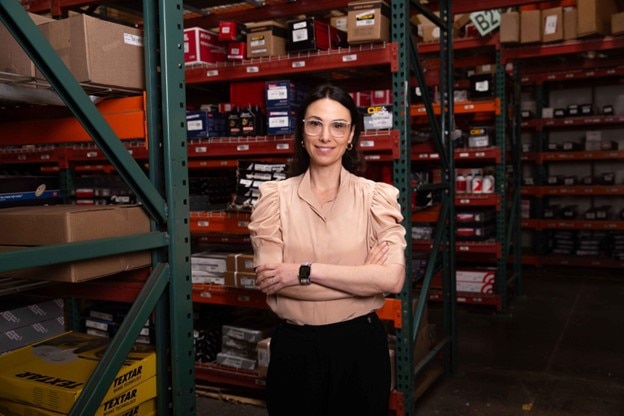
Jarah is the CEO and co-founder of WorkWhile, a workforce-as-a-service platform. Previously, she co-founded the DataOps platform Nexla and was founder and CEO at Famous Media, a pioneer in hyperlocal content acquired by McClatchy. She also led the analytics and marketing teams at Flurry, an innovator in mobile app analytics acquired by Yahoo, where she was VP of Product. Jarah was formerly a consultant at Boston Consulting Group and started her career in hourly work as a retail associate. She is a member of EY Entrepreneurial Winning Women. Jarah holds an MBA from the Wharton School at the University of Pennsylvania and a BS from New York University.
The Citi Impact Fund makes "double-bottom line" equity investments into U.S.-based companies that are developing innovative solutions to address pressing community challenges across four focus areas: Financial Resilience, Social Infrastructure, Future of Work and Climate Resilience.