
A Better Way to Bank: Inside Kate Luft’s Strategy to Deepen Client Connections
HIGHLIGHTS
- Kate Luft is transforming Retail Banking, unlocking a significant growth opportunity within Citi's existing client base
- Her approach combines operational simplification with a renewed focus on relationship banking, helping deepen engagement across Citi’s offerings
- Investments in branches, advisors and digital experiences are making banking easier while creating stronger connections with customers and clients
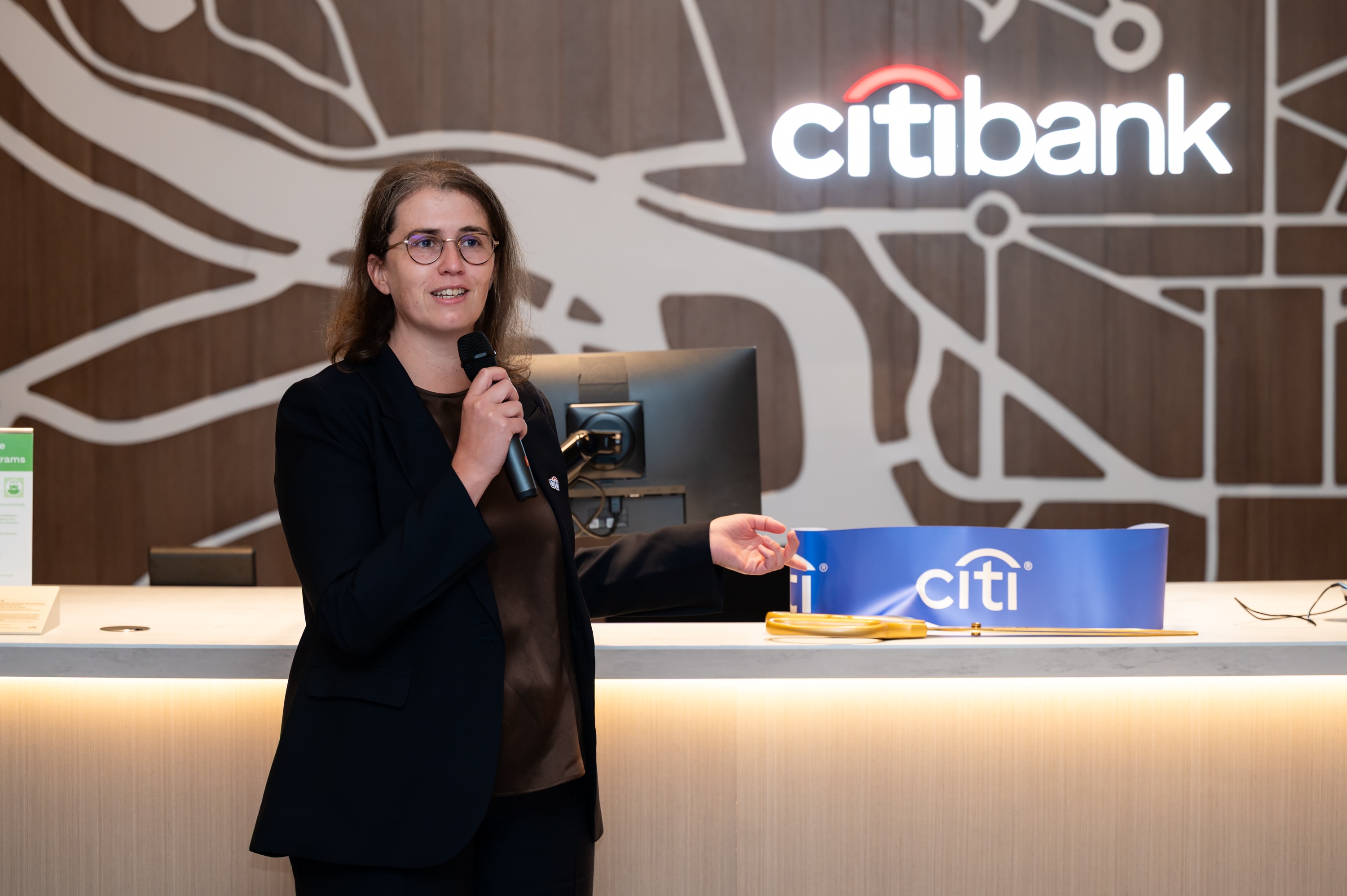
In the first six months of 2026, Kate Luft, Head of U.S. Retail Banking and Citigold,1 visited 26 Citi branches, watching transactions unfold and speaking directly with the people carrying them out. She met with financial advisors, branch managers and bank tellers — listening to their experiences, their challenges and their ideas.
There is a particular kind of clarity that comes from this direct interaction, which she has long practiced.
“Ask the why,” Kate says.
The question is simple, almost obvious. But the answers rarely are.
“Why does this process take two days? Why do we require this step? Why can’t this be simpler?”
For Kate, progress is driven by curiosity and a willingness to challenge the status quo.
By listening at the branch level, she gains a clearer view of how strategy unfolds in practice. “I try to spend a significant amount of time in the field,” Kate says. “Because that’s how I really understand what our teams need.”
Retail Banking is where relationships begin — supporting clients at every stage of their financial journey with the tools, guidance and access they need day-to-day and as their lives evolve. Increasingly, that relationship extends across both in-person and digital experiences. Clients are highly digitally engaged, with more than three-quarters logging in online or through the Citi Mobile® app each month — a rate that places Citi among the highest of big banks.
Where Banking meets Wealth
In late 2025, Citi brought its U.S. Retail Banking business into Wealth, combining management oversight with Citigold and Citigold Private Client. The move built on years of collaboration across branch and advisory teams, positioning Citi to grow business with affluent clients and enable strategic decision-making on investment priorities, footprint and client acquisition efforts.
With a $3 trillion2 opportunity in existing client assets already within the Retail Banking and Citigold base, the integration reflects a deliberate move to deepen those relationships — helping clients engage more fully with the breadth of what Citi can offer.
Kate is at the center of that effort.
Today, her strategy is taking hold across a focused footprint of 650 branches3 supported by a network of more than 900 advisors and relationship managers in six key markets. Those markets tend to have more affluent client bases — about 1.6 times the national average4 — reinforcing a deliberate focus on where Citi is best positioned to deliver value.
And Kate’s career path within the firm informs how she addresses the client experience.
Seeing the business end to end
Kate began at Citi in 2008 on the trading floor. She found she was energized by the pace and dynamic nature of the work.
“I was doing work that had real impact on the macro environment,” she recalls. “I was learning something new constantly. I was hooked.”
From Sales and Trading to Mortgages, then into Operations and Retail, Kate’s career at Citi has taken her from New York to Miami to Sydney and back again. Each role added to a broader perspective, giving her a holistic understanding of how the business operates.
“When you think end to end,” she says, “it doesn’t matter what country you’re in or what business you’re in. You can make meaningful impact at scale.”
That phrase — end to end — comes up often with Kate. It’s not a buzzword so much as a governing principle.
It’s a deceptively simple concept, but in practice it requires something rare: the ability to step outside the boundaries of any one function and see the system operate as a whole.
Relationship banking, redefined
Delivering on her mandate to simplify banking requires discipline. In many cases, the opportunities she identifies are rooted in how the work is carried out day to day, rather than in large-scale structural change.
Far from being obsolete, branches remain central to this approach.
When you think about physical branch space, every generation of client wants to be able to walk into a branch for complex guidance, but not everyone’s walking into the branch at the same time.
Branches are being repositioned as relationship-led hubs, designed around advisory engagement and deepening long-term client relationships — meeting clients at different moments in their day, whether they are stopping by to pick up a foreign currency order ahead of an overseas trip or to meet with an advisor for long-term planning.
To support that shift, personal bankers and advisors are beginning to leverage AI-driven insights to identify opportunities to deepen relationships.
That focus on a simple end-user-focused experience is the lead-in to a deeper strategy: encouraging clients to make Citi their primary bank. This discipline of earning deeper loyalty from the onset is crucial for building lasting relationships.
The recent launch of digital direct deposit enrollment is a prime example, making it easier than ever for clients to route their paychecks to Citi. This is complemented by new fee waivers designed to help young adults establish a healthy, low-cost financial foundation. Upcoming updates to relationship-based pricing are designed to further reward clients for that loyalty. In parallel, improvements to account opening and onboarding are reducing time and complexity while increasing adoption of Citi’s digital financial tools.
“We’re helping clients become digitally active from day one,” says Kate. With digital account opening in the branch, the process now takes just seven to nine minutes.
Kate’s strategy is already paying dividends. She recalls a client who flew from Colorado to San Francisco to open an account, choosing to spend time with a banker and understand the full scope of what a relationship with Citi could offer.
It reflects a growing recognition that clients favor banking built around relationships rather than products — evidenced by the nearly 325,000 clients who have upgraded to Citigold in recent years5 — an approach that is extending Citi’s Retail Banking reach beyond its existing physical footprint.
Anecdotes like this signal broader momentum, showing that when banking is designed around relationships, it resonates.
Ongoing discipline
For Kate, progress comes through iteration. Each improvement builds on the last, as insights she learns in the field clarify what to refine, simplify and strengthen.
The opportunity, she notes, is significant. Not only to grow relationships, but to deepen them by understanding more, anticipating more and delivering in ways that feel increasingly organic over time.
Throughout Kate’s career, she has been driven by a belief that better is always possible.
You just have to be willing to ask why.
1. Citigold® is a registered trademark of Citigroup Inc. Deposit products offered by Citibank N.A., Member FDIC.
2. $3 trillion “off-us opportunity” refers to the estimated total market size or potential revenue/asset generation from clients or transactions not currently serviced by or conducted through U.S. Retail Bank and U.S. Citigold platforms, products or services. Estimated total market size derived from third-party sources (Source: Equifax IXI), internal Citi data, client self-disclosed data and internal estimates. Data is subject to further changes, including possible changes in methodology.
3. Six affluent urban markets: New York, Los Angeles, San Francisco, Chicago, Miami and Washington, D.C.
4. Estimated from third-party sources (Source: Equifax IXI), internal Citi data, household self-disclosed data and internal estimates. Compares the percentage of Citi affluent households in Citigold and Retail Banking versus the percentage of affluent households in the U.S. overall. Affluent threshold used is greater than $500K of investable assets to align with external data sources.
5. Reflects the number of clients upgraded from Retail to Citigold (NAM only) from 2022 to 2025.