A Competitive Differentiator
HIGHLIGHTS
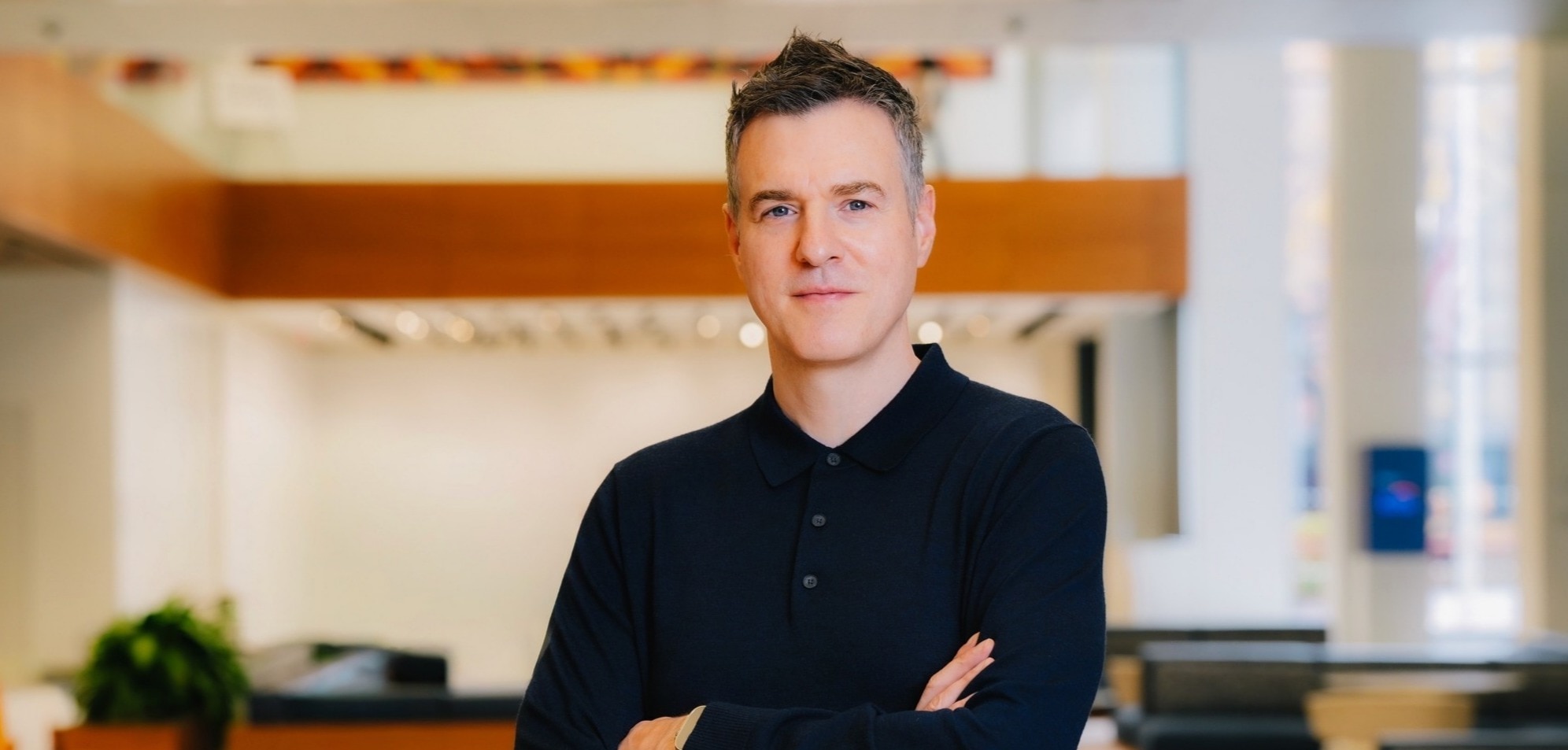
- David Griffiths, Citi’s Group Head of AI, drives the firmwide strategy to embed AI across a global systemically important bank that moves nearly $6 trillion daily
- From the Arc agent platform to a proprietary suite of AI tools (Citi AI) and a wealth management assistant (Citi Sky), Citi’s sophisticated AI ecosystem helps serve clients, generate revenue and gain wallet share
- Key relationships with top-tier industry players — including Anthropic, OpenAI, Google and Microsoft — position Citi as the bank to define the next era of financial services
What does it take to embed AI into every part of the world’s most global bank, moving nearly $6 trillion every day?
“Keep pushing, pushing and pushing,” says David Griffiths, Citi’s Group Head of AI. “We have phenomenal AI engineering capability at Citi, and we’ve developed that from within.”
David’s mission is to provide Citi colleagues across the globe with access to the best AI tools — whether to directly serve clients, develop software or assess risk.
He and his team of engineers, developers and product managers have hit impressive milestones, delivering a comprehensive suite of AI tools to employees across more than 87 countries and jurisdictions. The firm’s flagship AI platform, Citi Stylus Workspaces, has rolled out to more than 180,000 people to date, providing a powerful tool to analyze complex data, conduct in-depth research and automate multi-step workflows. In fact, employees have interacted with the firm’s AI tools more than 65 million times since the internal AI rollout began in December 2024, with a total adoption rate of more than 87%.
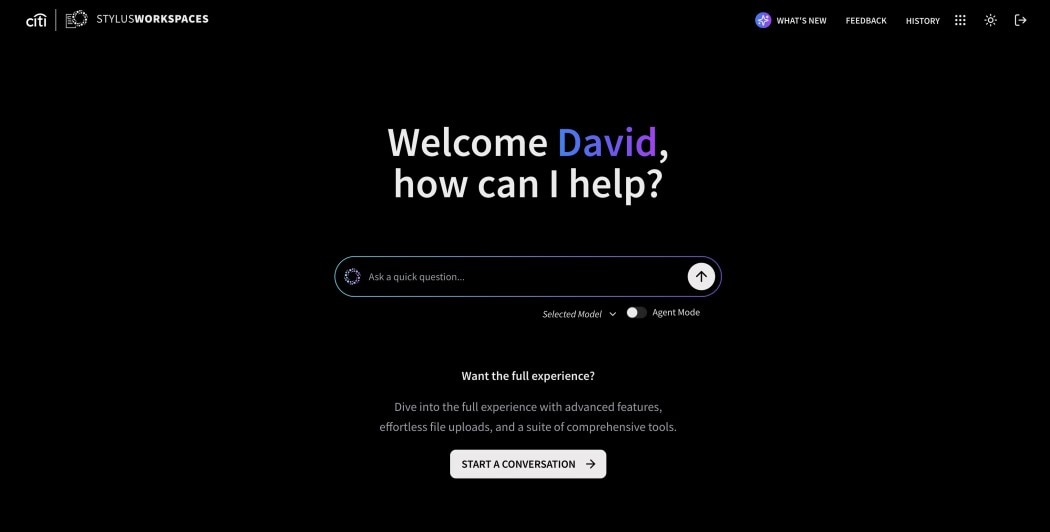 Citi has released more than 26 versions of Stylus Workspaces since its launch.
“When we deploy AI at Citi, we have to do it in a uniform way so that you don’t have an AI implementation in one part of the world or business that can’t speak to the other,” he continues. “Controls are automated at the platform level, so colleagues do not have to conduct lots of manual checks for approvals or reviews. It’s as smooth as possible.” As a global systemically important bank in a highly regulated industry, “we have to build technology to make it as easy as possible to operate in the right way,” he adds.
At the same time, David’s team builds capabilities without having to know every possible use case upfront — colleagues have the flexibility to be creative. Balancing the speed of innovation while maintaining the highest standards for safety and regulatory compliance is “an incredible tension point,” he says. “But it’s the right tension. If there was no tension, you’d either be going too fast and not caring about the risks or you’d be caring so much about the risks that you’d lock yourself into position.” Citi has controls in place across the entire AI lifecycle, and a human is always in the loop.
The business case for a sophisticated AI ecosystem
Strategically, Citi is approaching AI as a competitive differentiator to gain wallet share. Scaling AI across the firm is “a highly commercial endeavor,” David says, increasing efficiency and creating new products to generate more revenue. “The faster we can create, test and deliver innovative ideas, the better we are as a bank.”
From his perspective, AI’s most transformative use case is for Citi’s developers and coders to build a sophisticated ecosystem — beyond one-off chatbots and automation tools — to help run the firm’s businesses and serve clients. Early on, Citi adopted Devin, a coding agent developed by the AI lab Cognition to expedite complex, multi-step coding tasks. One such task involved re-mapping more than 30 years of legacy code across the firm in two days.
Across Citi, the potential extends beyond driving efficiency and enabling developers to complete projects more quickly. “Increasingly, most of what we do with our products and how we get to our markets is through a comprehensive technology experience,” David explains.
In the realm of agentic AI, Citi introduced Arc in April 2026 to deploy embedded AI agents across every business line, geography and function — all with the same rigor and control applied to any critical system within the firm. “Arc scales instantly, from one user to hundreds of thousands without any compromise in security or performance,” David explains.
“This control, scale and flexibility is something that no other bank has at this level of maturity. The real game-changer is that we’ve built industrialized infrastructure to make AI agents a core part of how we serve our clients. We’ve got agents talking to other agents as part of doing business.”
For instance, the U.S. Consumer Cards business is preparing for the future of agentic commerce. A customer’s personal AI assistant could advise and execute transactions on their behalf, automatically re-booking a canceled flight and arranging transportation all while paying with the card that offers the best travel benefits and protections.
And that’s just a glimpse into what’s possible. Within the Wealth business, the AI-powered avatar called Citi Sky will provide timely financial guidance for clients at any hour of the day. And within the Services business, AI is accelerating client onboarding by reducing document review in the U.S. from about an hour to 15 minutes.
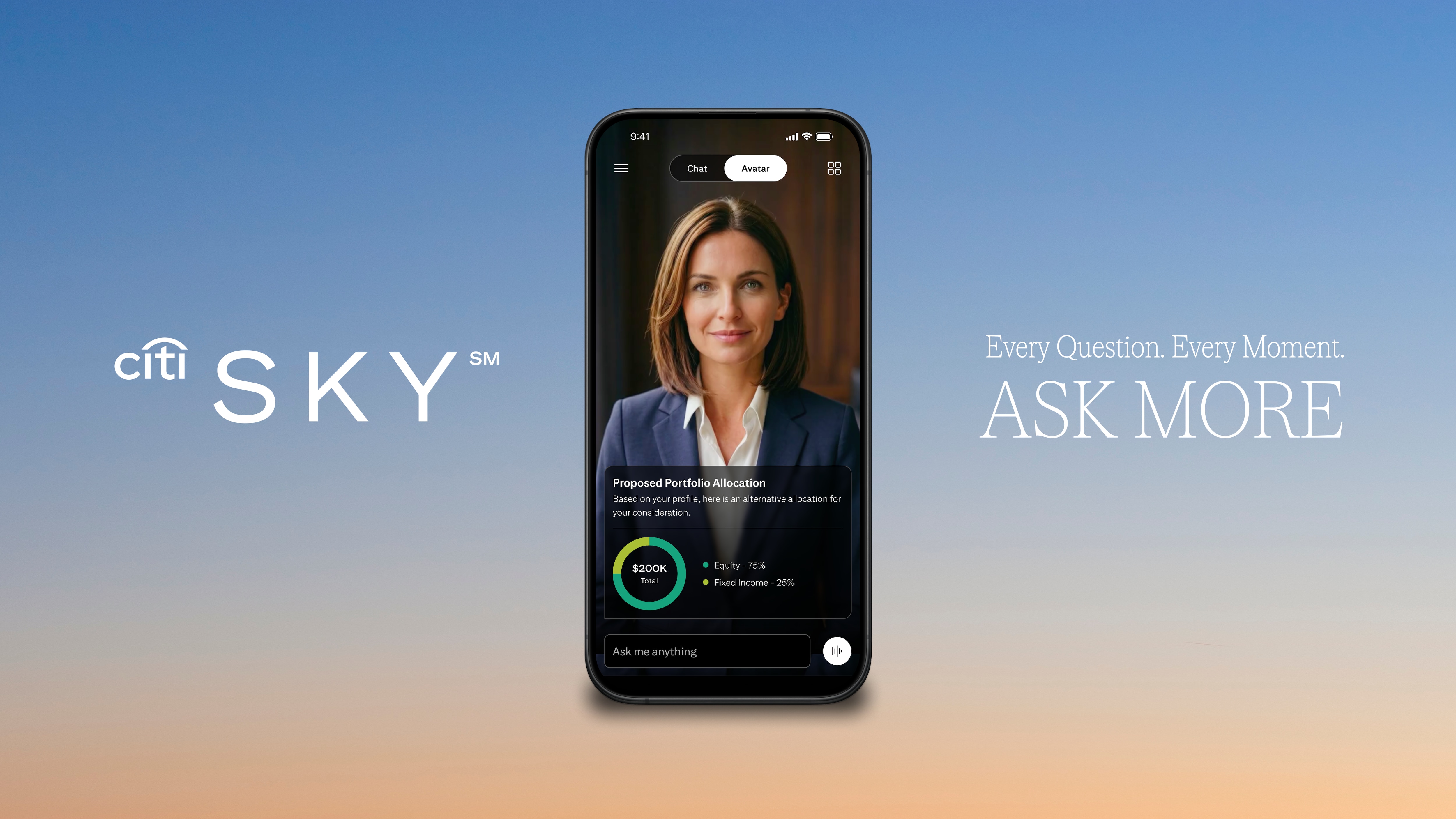 Citi Sky, built with technology from Google Cloud and Google DeepMind, is in testing with select U.S. colleagues and clients.
Top-tier AI partnerships
From Anthropic and OpenAI to Google and Microsoft, Citi maintains key relationships with major AI industry players. On the topic of cybersecurity, Citi is involved in Anthropic’s Project Glasswing, which brings together the likes of Amazon, Nvidia and CrowdStrike to strengthen defenses for critical infrastructure, from banking to power grids, as new AI models advance their abilities to find and exploit software vulnerabilities.
“In a world where things are moving so quickly, having that ability to see into the future with the people making it happen is incredibly helpful,” David says.
Given how rapidly AI models are evolving, there is no shortage of opinions about potential opportunities and risks. “Reducing the signal to noise ratio is very important,” David stresses, “so you can be confident you’re working on the right things and not just getting distracted. The only way to do that is to be directly connected with the AI labs doing the work.”
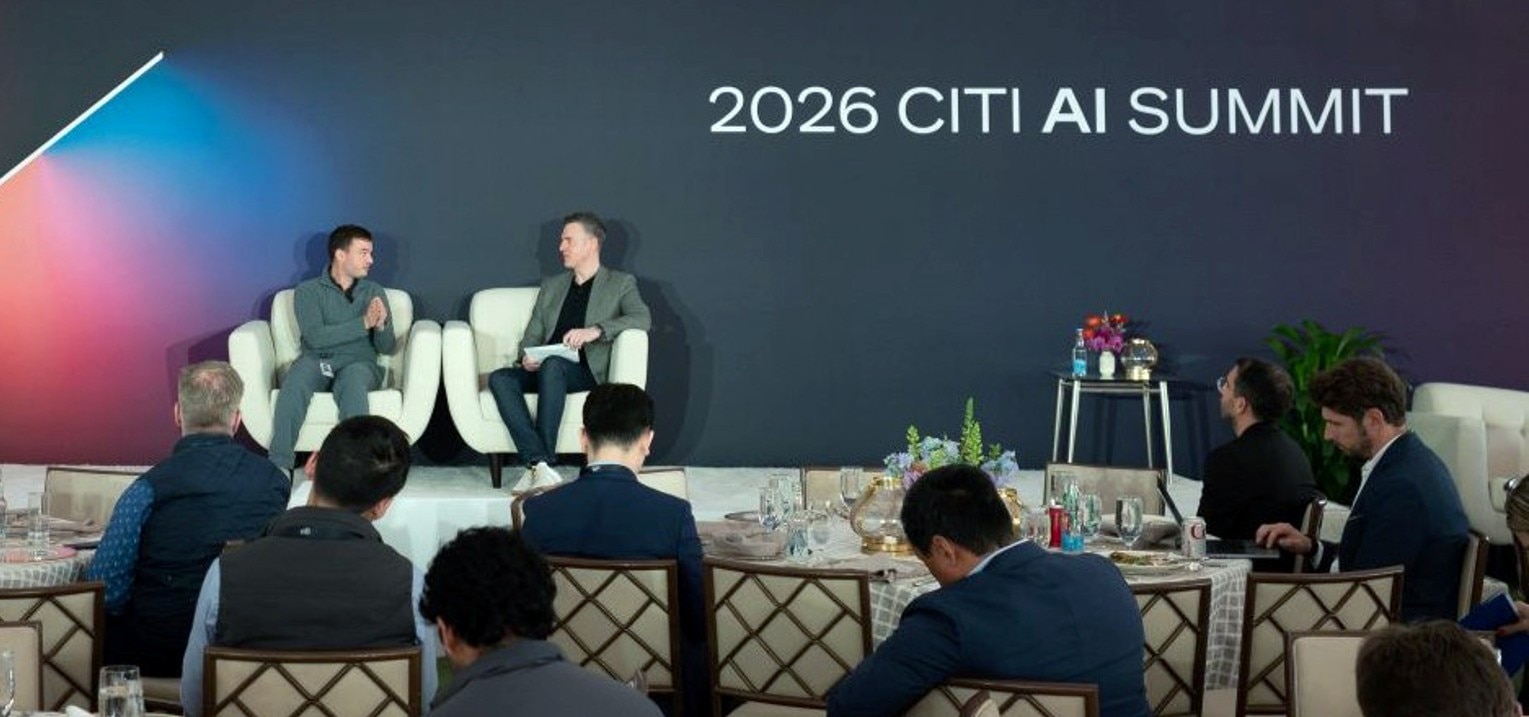 Citi's Group Head of AI David Griffiths (onstage, right) speaks with xAI's Andrew Milich (onstage, left) at the 2026 Citi AI Summit.
‘Like magic’
“I’ve always been fascinated with how we work as a complex thinking machine,” David shares, having studied neuroscience at University College London. A very hands-on and practical person, he started using AI models as soon as they emerged. “The early days of using these models felt like magic,” he reflects. “Back then, the models were so new. It was mind-blowing and obvious to me that AI was going to change the world.”
David joined Citi in 2012 as a technology lead for the Equity Derivatives team within the Markets business, which he characterizes as the “superset of all concerns across equities, foreign exchange, interest rates and everything else.” That experience deepened his understanding of Citi’s businesses, including how the firm generates revenue and manages risk — and the technological architecture needed to do so at scale. From there, David took on progressively more senior roles with broader coverage of the firm’s whole technology portfolio, including for Citi’s business with institutional clients.
Before his current role overseeing AI firmwide, David was Chief Technology Officer, responsible for establishing and executing Citi’s core technology strategy across businesses and functions. For him, technology and engineering are “incredibly creative” endeavors: “When you create something and put it out there, and people use it and like it, there’s really nothing more rewarding.”
In David’s view, the opportunities ahead are staggering. “The banks that get this right first will be those that define the next era of financial services,” he says. “We will be that bank.”