Alex Azar on the Future of Healthcare
Key Takeaways
- Genomic Revolution Driving Curative Therapies: Healthcare is entering an unprecedented phase driven by the genomic revolution, leading to highly effective, targeted curative therapies that redefine disease treatment and prevention.
- Urgent Need for Payment Model Innovation: The current healthcare payment system faces a critical challenge with the advent of high-cost curative therapies, particularly due to the "time discontinuity" between who pays for treatment and who ultimately benefits.
- AI as a Transformative Force in Healthcare Delivery: Artificial Intelligence is poised to revolutionize multiple facets of healthcare, from streamlining clinical trial enrollment and democratizing access for patients in underserved areas to significantly enhancing the efficiency and precision of healthcare providers, especially in diagnostics like radiology, by amplifying human capabilities.
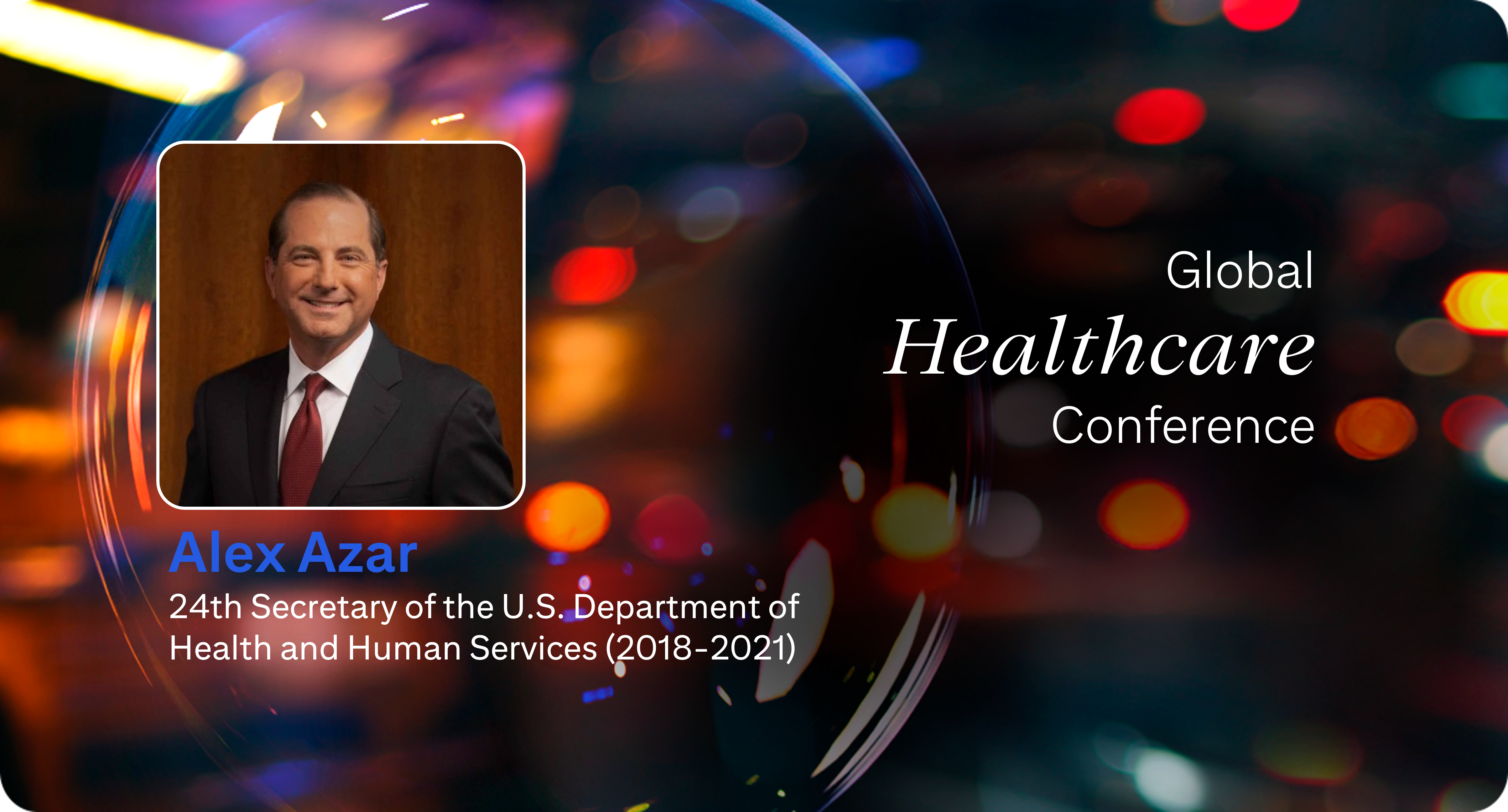
In this interview moderated by Joanne Wuensch from Citi Research, which took place at the Citi Healthcare Conference 2025, Alex Azar, Former Secretary of the U.S. Department of Health and Human Services (2018-2021) discusses the transformative era of healthcare innovation. He highlights the impact of the genomic revolution, which, over the past 25 years, has deepened our understanding of disease at a molecular and genetic level, paving the way for highly targeted curative therapies. This shift necessitates a re-evaluation of traditional clinical trial designs, moving from broad efficacy studies to focusing on off-target safety and impact due to the high certainty of success with validated targets.
Azar emphasizes the significant challenge of payment models, particularly the "time discontinuity" where the benefits of expensive, life-saving treatments are realized over a lifetime, while payers (employer-sponsored insurance or Medicare) may only cover a short period. He advocates for industry collaboration to solve this microeconomic problem of reinsurance and risk pooling, cautioning against government-imposed solutions.
They also discuss the revolutionary potential of Artificial Intelligence (AI) in healthcare. Envisioning AI democratizing access to clinical trials by improving patient identification, enhancing provider productivity and fundamentally changing diagnostics.