India Doubles Down on AI Push
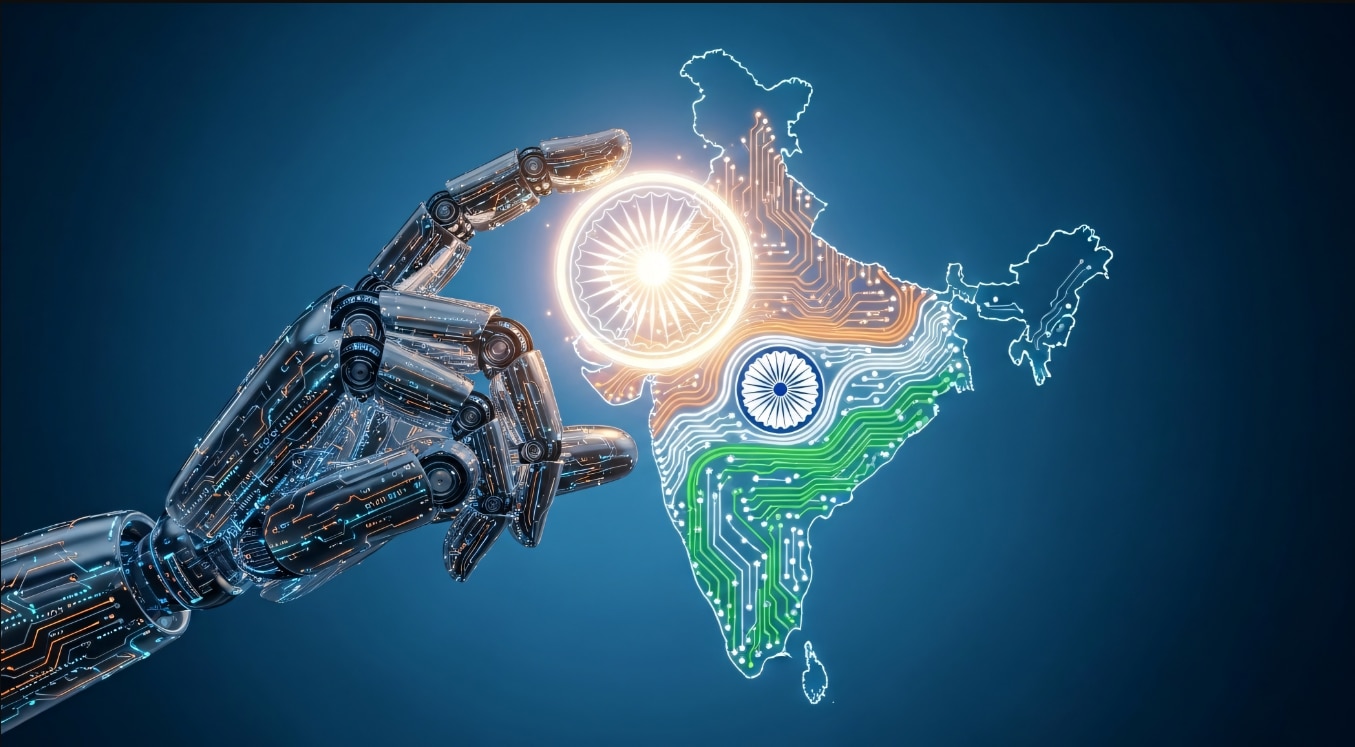
The annual AI Impact Summit, which began in 2023 in the UK, was recently held in New Delhi, India. Attended by leading technology firms, banks, policy makers and political leaders (including India’s Prime Minister Narendra Modi and French President Emmanuel Macron), it was the first time the summit took place in the Global South. Citi Institute’s Dr. Prag Sharma was a panel contributor, speaking on agentic AI and its implications for 2026. Ronit Ghose, the Head of Citi Institute’s Future of Finance team, caught up with Prag.
HIGHLIGHTS
- India could become a leader in applied AI by increasing investment and focus on vertical applications such as healthcare and public services and driving national-level adoption
- The country’s ambition goes beyond adoption and usage to include developing models and investing in data center infrastructure
- There is increasing top-down interest in adopting AI but most organizations remain at an early stage
What were your key takeaways from the summit?
That India aims to be a leading global player in building and scaling agentic AI ecosystems, with a focus on infrastructure, innovation and impact at national scale. My panel explored how tokenization could help accelerate the adoption of agentic AI systems in payments. What is agentic AI? It is generative AI plus execution. That means not just producing insights or content, but undertaking various tasks on behalf of the user, such as connecting to databases and updating them, drafting and sending emails on your behalf, integrating with downstream systems, and moving beyond isolated tasks to complete end-to-end processing.
The focus now is on capital and infrastructure. Another important development is international collaboration. India is looking to deepen its partnership with France, particularly given France’s strength in foundation models such as Mistral AI."
India wants to be a leading force in AI. What does this ambition mean in practice?
Prime Minister Narendra Modi attended the summit in person and showcased India’s domestic AI capabilities. There was real energy on the ground, with plenty of entrepreneurs discussing their agentic AI frameworks and applications. The talent base is clearly there. The focus now is on capital and infrastructure. Another important development is international collaboration. India is looking to deepen its partnership with France, particularly given France’s strength in foundation models such as Mistral AI.
More broadly, there is a dual-track approach. First, there is a clear drive at the national level to establish partnerships between Indian organizations, such as consultancies and conglomerates, and global foundation model providers to expand their offerings. Second, sustained investment in AI and digital infrastructure is needed to ensure India becomes a major AI ecosystem hub in the coming years. Whether current investment levels are sufficient remains an open question, especially given the gap with the U.S. and China. Some stakeholders think that India must move faster. By increasing investment and focus on vertical applications such as healthcare and public services, and driving national-level adoption, the country could become a leader in applied AI.
You have met a wide range of corporates across Delhi, Mumbai and Bangalore to discuss AI. How are they adopting AI and adapting their business models?
We met over 30 corporates this week, and in total more than 80 individuals across treasury, finance and technology teams in Delhi, Mumbai and Bangalore. The mix was broad, spanning technology, consulting, corporate and commercial banking clients. In terms of use cases, there is a common pattern. Almost everyone wants to use AI, and adoption levels are broadly similar. Most are focused on uses that I would summarize as TEAG-CC (Translate, Extract, Analyze, Generate, Compare and Code). Teams want access to the tools and want to roll them out more widely across their organizations, especially within treasury and finance.
There is increasing top-down interest in adopting AI. One treasurer noted that discussion meetings with their CFO on automation and AI have shifted from a quarterly to a weekly basis. That said, most organizations remain at an early stage. Functions such as treasury and finance are still working out how to move beyond basic prompting. What is not happening yet is important. Only one client mentioned that they have actively experimented and moved beyond TEAG-CC, into fully embedded, revenue-generating AI applications. Revenue-linked uses are still limited, and most firms are relying on third-party foundation models, often developed outside India.
Can you name one key takeaway from your week in India?
India wants to be a leading force in AI. There was a strong statement of intent to rank among the top three players in the AI ecosystem by 2047, to coincide with the country’s 100th year of independence. This ambition goes beyond adoption and usage. It includes developing models and investing in data center infrastructure. As the name of the summit suggests, the emphasis is firmly on impact. Given India’s scale, the focus is on deploying agentic AI in a way that benefits the broader population, ensuring inclusion and avoiding digital exclusion. Today, models, data and many applications are largely dominated by the West.
At the same time, what struck me equally was the bottom-up momentum. There is no shortage of talent. At an individual level, there are many capable engineers and entrepreneurs who want to build and deploy these models. The real challenge is building or refining the full stack, from hardware inputs and data center capacity to GPU access, data availability and, ultimately, scalable use cases. The enthusiasm is real, the intent is serious and the opportunity may be significant, but it requires coordination across the stack.