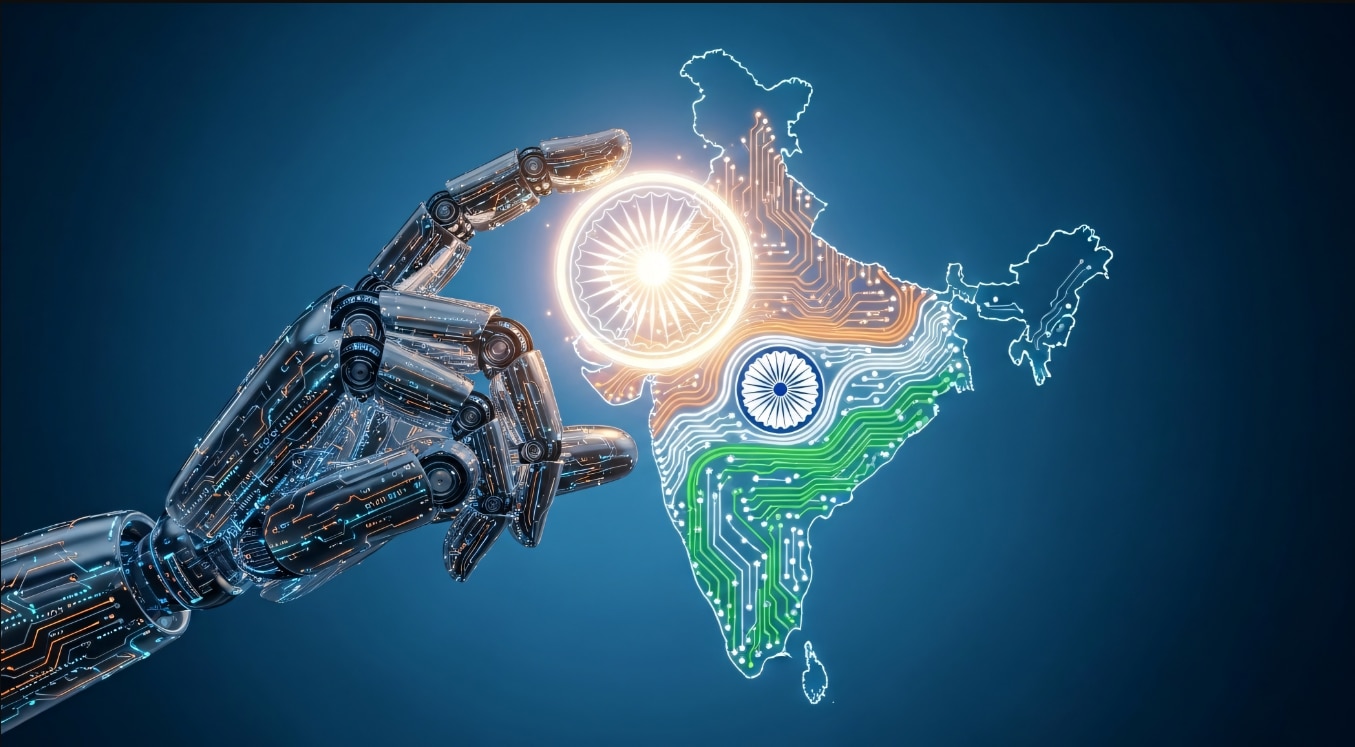
India’s Trust-Powered Ascent

HIGHLIGHTS
- India's "India Stack" and UPI are driving a fintech revolution. This world-class digital infrastructure fosters financial inclusion and scalable business models, cementing India's role as a leader in digital innovation and sustainable economic growth.
- India's political stability and policy continuity make it a trusted destination for foreign investment. Capitalizing on the "China plus one" trend, the nation is a strategic hub for diversifying supply chains and securing long-term growth.
- India's young, aspirational population is its demographic dividend. This vast talent pool is transforming the nation into a global capability and innovation hub, moving beyond back-office support to lead in AI and technology development.
In an era defined by economic fragmentation, shifting supply chains, and intensifying competition for capital, India is emerging as one of the defining growth stories of the global economy. With a young population, expanding digital infrastructure and ambitions to become a developed economy by 2047, the country is increasingly positioning itself as both a major consumer market and a strategic hub for global investment.
Ahead of Citi’s upcoming India Conference, we spoke with K. Balasubramanian, Citi’s Chief Country Officer for India, about the forces driving India’s rise, the role of technology and capital in shaping its future and how Citi is supporting the country’s economic transformation.
How is India sustaining its position as the world’s fastest-growing major economy — and why does that matter globally?
India is still a very young country. The average age is around 28 years, and India has a large and expanding middle class, making it a highly consumption-driven economy.
Because the population is young, it is also highly aspirational. Per capita GDP has been growing consistently for more than a decade, and when you combine a young population with rising incomes and aspiration, it creates the potential for a huge consumption boom.
Technology development in India has also become world class. Today, digital payments have become deeply embedded in everyday life, with UPI accounting for the vast majority of India’s digital payment volume. Platforms created through what we call the India Stack are enabling consumers and corporations to build globally scalable businesses.
The government has laid out an ambitious vision of making India a developed nation by 2047, the 100th year of independence. India’s GDP today is a little over $4 trillion, and the expectation is that it could grow to around $30 trillion by that time.
To achieve that, India would need to sustain annual growth of around 8–9% over the next two decades. But when you look at the country’s growth trajectory over the last 10 years, which has been around 7%, it does not feel unrealistic. A lot of the building blocks are already in place.
Despite increasing geopolitical fragmentation globally, India has maintained an independent position focused on what is best for the country and its people, rather than aligning too closely with any one power bloc.
Why has India become an increasingly trusted destination for international businesses and investors in a fragmented global environment?
One of the key factors is stability.
India has remained the fastest-growing large economy in the world over the last five years, particularly since the pandemic, and a large reason for that is the stability the country offers. We have had policy continuity under the same government since 2014, and that consistency is a critical ingredient for long-term economic development.
Despite increasing geopolitical fragmentation globally, India has maintained an independent position focused on what is best for the country and its people, rather than aligning too closely with any one power bloc.
That approach has paid rich dividends. Investments are coming into India from the United States, Western Europe, and increasingly from Asian countries including Japan, Korea, and Taiwan.
That combination of geopolitical openness, political stability and policy continuity has been compelling for investors. Add to that a population of 1.4 billion people with a young and increasingly consuming middle class, and the long-term opportunity becomes difficult to ignore.
What role will foreign capital and global financial institutions play in India’s next phase of growth?
If India wants to become a developed economy by 2047, the country will require enormous amounts of capital.
Domestic savings alone will not be enough to support that level of growth, which means foreign capital will continue to play a critical role.
That capital may come through portfolio investments, sovereign wealth funds, or foreign direct investment tied to manufacturing and infrastructure. We are also seeing a significant “China plus one” trend globally, and India is well positioned to benefit because it offers both a large domestic consumption base and an export opportunity.
Today, Citi has around 22% market share in multinational banking business entering India and more than 35% market share in foreign institutional investor flows through our custody and securities services business.
We have also helped companies raise capital publicly and privately, including many of the country’s largest IPOs.
So, despite the fact that we are an international bank in India, we see our goals as very aligned with India’s broader development goals, helping bring capital into the country and helping Indian companies connect with the rest of the world.
How has India’s digital public infrastructure reshaped the economy?
When the current government came into power in 2014, one of its priorities was creating an economic framework that could benefit the entire population of 1.4 billion people.
That led to the creation of what we call the India Stack. At its core is the JAM trilogy — Jan Dhan bank accounts, Aadhaar digital identity, and mobile internet connectivity.
Together, those systems connected the population into a single digital ecosystem, giving the government the ability to transfer benefits directly into people’s bank accounts and significantly reducing inefficiencies in the system. If someone was eligible for support, they received it directly, which helped drive both financial inclusion and consumption growth.
The India Stack also created a major opportunity for entrepreneurs and businesses. Companies began building new consumption-driven business models on top of this infrastructure, attracting venture capital and private equity investment before eventually scaling through IPOs.
Many of the companies that emerged over the last decade are now valued in the tens of billions of dollars.
How does India’s talent ecosystem strengthen its position within the global economy — and what role does Citi play in that evolution?
People sometimes underestimate the depth of India’s talent pool and its growing role in the global economy.
At Citi, for example, we have around 35,000 people working across our shared services and global capability centers in India, supporting operations across roughly 65 locations globally.
What is particularly exciting now is how much innovation is increasingly happening from India itself. Around 70% of our colleagues in these centers are already using AI in some form within their workflows, and many of our teams have created patents and intellectual property tied to AI and process efficiency.
These centers are no longer just back-end operations. That combination of talent, technology adoption and scale is one of the reasons global companies increasingly see India not just as a market, but as a long-term innovation and capability hub.