
Overcoming Gridlock 2.0 — Solving Power Bottlenecks to Drive AI & Energy Security
KEY TAKEAWAYS
- Strong growth in AI, energy security investments, renewables, batteries and EVs is driving sustained demand for power infrastructure and generation equipment
- Grid expansion is struggling to keep pace with rising power needs, increasing interest in distributed energy solutions and bring-your-own-generation strategies
- Even if AI-related power demand moderates, long-term electrification and energy security trends should continue to support substantial investment across the power value chain
A new Citi Research report from a team led by Head of Energy Strategy Anthony Yuen looks at the challenges hampering efforts to expand the world’s power grids, work that appears unable to keep pace with strong demand and supply growth. In this Must C report, we examine the evolving power landscape and explore pathways to ease grid constraints while supporting AI deployment and energy-security goals.
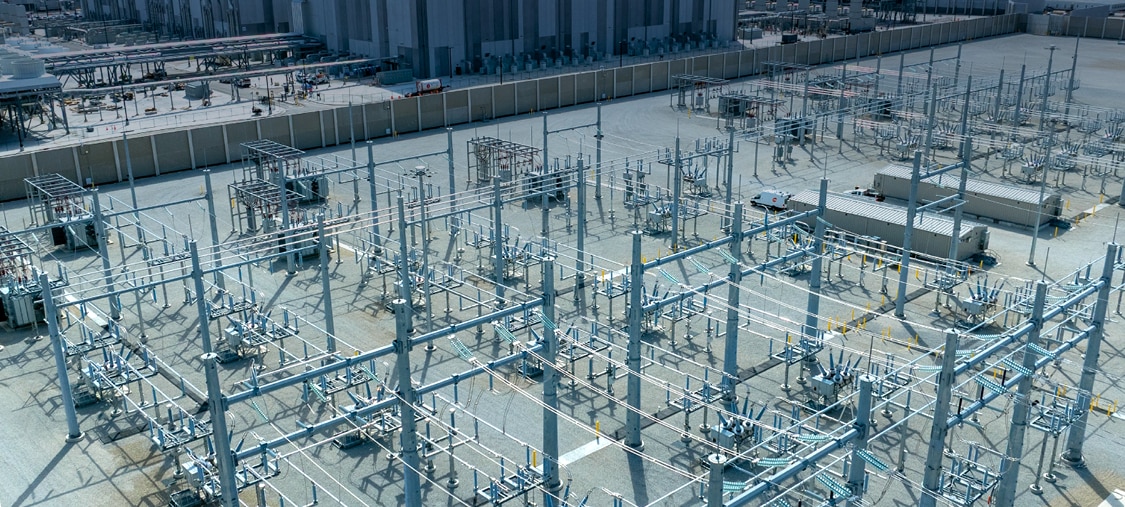
Demand for power infrastructure and generation equipment continues to rise, driven largely by the U.S.-focused AI data-center buildout, as well as growing concerns around energy security. At the same time, the expanding adoption of renewables, batteries, and electric vehicles is adding to equipment demand. Yet power grids in many regions are struggling to keep pace, constrained by both supply-chain bottlenecks and lengthy permitting processes.
As a result, speed-to-power has become a critical priority. Rather than waiting years for new grid connections, many power users are increasingly pursuing distributed solutions and "bring-your-own-generation" (BYOG) strategies, particularly ones based on U.S. natural gas. While grids will continue to expand, demand growth has been far stronger than expected, extending equipment lead times and increasing pressure on existing infrastructure.
We believe AI will remain a significant driver of power investment. And even if AI-related demand growth moderates, the broader trends of energy security, electrification, renewable deployment, and EV adoption will still require substantial investment in power infrastructure and generation equipment.
To meet these needs, demand is rising for a range of generation technologies, including combined-cycle gas turbines, reciprocating engines, aeroderivative turbines, fuel cells, renewable power, and energy storage systems. In the U.S., many of these solutions depend on natural gas supply, creating potential opportunities across the midstream sector.
Not just about supplying power
Building new power infrastructure is a lot more complicated than simply constructing a power plant and connecting it to the grid. In our view, three challenges increasingly define the landscape: persistent labor shortages, the unique characteristics of AI-driven power demand, and lengthy regulatory and permitting processes. Together, these factors are making it harder to bring new power supplies and data-center projects online, even as demand continues to accelerate.
Labor remains one of the most important constraints. Across much of the world, the market for skilled trades and technical professionals is tight, particularly for occupations that support both data-center and power-infrastructure development.
In the U.S., shortages of electricians, lineworkers, construction managers, mechanics, plumbers and other skilled workers are being compounded by simultaneous investment across data centers, utilities, renewables, EV charging networks, semiconductor manufacturing, transmission projects, housing, and public infrastructure. These industries are often competing for the same labor pool. As a result, securing qualified workers can increase costs, extend timelines, and create bottlenecks even when financing and equipment are available.
We don’t expect these labor constraints to disappear quickly. Structural factors such as retirements, insufficient apprenticeship pipelines, and growing demand from grid modernization and renewable-energy deployment suggest labor availability is likely to remain a challenge well into the next decade. While initiatives such as expanded training programs, prefabrication, standardized equipment modules, and greater field-service capacity can help, these solutions require time to scale.
Labor shortages are also a global issue, although the severity varies by region. Europe, the UK, Australia, and several fast-growing Asian markets face significant shortages of specialized talent, while China appears better positioned from a construction-capacity perspective but still requires advanced engineering and operational expertise.
Beyond labor, AI data centers are introducing a new level of complexity into electricity planning. The challenge isn’t simply about growing demand. Rather, utilities and grid operators increasingly must manage three separate dimensions simultaneously: the sheer volume of demand, the ability to deliver power when needed, and the volatility of that demand once facilities are operational.
The growth in volume is substantial. U.S. data-center capacity has expanded rapidly in recent years, and new facilities are requiring increasingly large amounts of electricity as computing hardware becomes more powerful. Yet translating this demand into actual operating projects has become difficult. Many proposed facilities face delays or cancellations before construction begins because developers can’t obtain power quickly enough or can’t secure the necessary equipment and approvals. Long waits for transformers, switch gear, generators, and interconnection studies can delay energization even when a project appears viable on paper.
These challenges have increased interest in onsite generation, often referred to as BYOG. In many cases, developers are evaluating natural-gas-based generation technologies as a way to bypass grid bottlenecks and accelerate deployment.
But the industry remains mindful of historical lessons. The power sector still remembers earlier periods when expectations for future demand resulted in excess generation capacity that later proved unnecessary. As a result, questions around the durability of long-term AI-driven electricity demand remain important when evaluating new investments.
Volatility presents another distinct challenge. Unlike many traditional industrial loads, AI data centers can experience significant swings in electricity consumption over relatively short periods, depending on workload intensity. Those changes affect not only computing equipment but also cooling systems and supporting infrastructure.
As renewable generation represents a growing share of the power mix, the interaction between variable electricity supply and increasingly dynamic demand adds complexity to grid operations. Utilities are therefore moving beyond traditional planning methods toward more detailed modeling that captures load behavior across different operating conditions, seasons, and weather scenarios.
Concerns about grid reliability are also receiving greater attention. System operators increasingly need to account not only for steady demand growth but also for the possibility of large and rapid increases or decreases in load that can affect voltage, frequency, and overall system stability.
The regulatory environment adds yet another layer of complexity. Permitting and interconnection processes exist for important reasons, including protecting reliability and ensuring that costs are allocated fairly. However, these processes weren’t necessarily designed for the scale and speed of current demand growth. In some cases, developers have submitted speculative or duplicate connection requests in an effort to secure future capacity, increasing the burden on utilities and grid operators that must evaluate projects that may never ultimately be built.
Regulators are responding. In the U.S., policymakers and grid operators are exploring ways to accelerate interconnection timelines while maintaining reliability and protecting consumers from unnecessary costs. A key theme is that large power users may increasingly be expected to fund the infrastructure upgrades required to serve them and, in some circumstances, provide their own generation during periods of grid stress. Similar debates are taking place internationally as governments balance economic development, reliability, affordability, and energy-transition objectives.
Stepping back, we believe the core issue is that both electricity demand and electricity supply are growing rapidly, but the systems required to connect them are struggling to keep pace. This dynamic supports continued demand for power infrastructure and generation equipment, while also creating supply-chain bottlenecks that can extend project timelines. In response, developers and policymakers are exploring a wider range of solutions, including flexible computing workloads, improved forecasting and grid modeling, dynamic grid technologies, and efficiency improvements that effectively function as a source of “virtual power.” Together, these approaches may help ease constraints, but they are unlikely to eliminate the need for substantial investment across the broader power ecosystem.