Heath Terry speaks with Nathan Benaich, founder of Air Street Capital, about key findings from Nathan's annual State of AI report, including intensifying competition among frontier model providers, the rise of AI agents and autonomous research, and growing demand for AI infrastructure. They also explore how cybersecurity, open-source ecosystems, and advances in model capabilities could shape the path toward artificial general intelligence.
Dirk Willer and Johanna Chua discuss key takeaways from the IMF meetings in Bangkok, including rising global bond yields, evolving central bank reaction functions, U.S. midterm election implications, and the growing influence of AI on productivity, capital demand, and markets. They also explore how emerging markets are navigating higher-for-longer interest rates, geopolitical risks, and diverging economic prospects across countries.
Rob Rowe and Candi Wolff discuss scenarios for the U.S. midterm elections and explore the "three A's" that have emerged as key issues for voters: affordability, AI, and anti-establishment populism.
Latin America is entering one of its most favorable environments in years, with both external and domestic conditions supporting a potential acceleration in growth. We see the opportunity as significant, but think lasting success will depend on reforms, execution, and policy consistency. A new Must C report from Citi Research looks at the opportunities and what’s needed for lasting success.
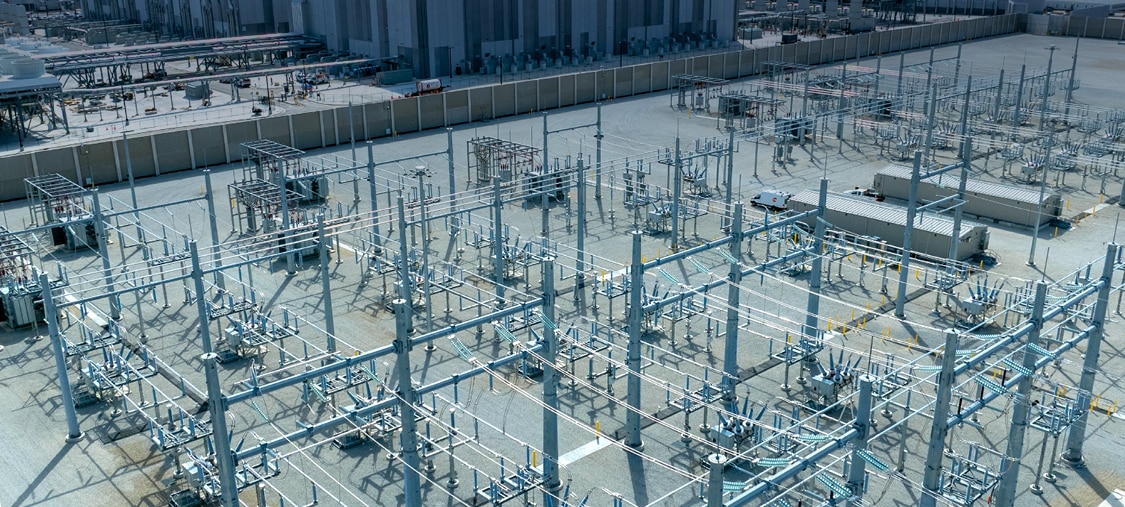
The work to expand global power grids appears unable to keep pace with strong demand and supply growth, constrained by supply-chain challenges and many regions' permitting frameworks. A new Must C report from Citi Research explores solutions that could ease grid constraints and accelerate AI deployment and energy-security transitions.
The 2020s have seen “wildcards” arrive at a rapid rate: COVID, the Russia-Ukraine war, AI and trade wars. And we’re only halfway through the decade! In this new Must C report, Citi Research considers more potential wildcards. While not our base cases, all of these scenarios could reshape our world in the near future.
The global economy has shown impressive resilience in recent years but current risks appear significant, ranging from tariffs in the near-term to longer-term risks such as public debt, aging demographics and economic and geopolitical fragmentation. We wrestle with these competing viewpoints in a new Citi Research report.
The new edition of Citi Research’s Global Equity Quarterly updates our global equity allocation. While we remain constructive on global equities, we worry that stretched valuations could cap future upside if earnings per share fail to deliver. We see three key themes as likely to shape equity-market performance, led by the broadening thesis, in which strong growth in earnings per share leads to a broad-based rally.
Consumers and firms have absorbed tariff pressures surprisingly well, and our narratives for global inflation, monetary policy and markets have remained broadly intact. In a new Citi Research note, Chief Economist Nathan Sheets and a team of analysts and economists offer their expectations for global growth and consider the risks to our forecast, which they see as roughly balanced. They also look at which groups appear to be bearing the cost of tariffs so far.
Research through the lens of broader peer analysis that cuts across traditional industry lines.
Collaborative analysis on macroeconomic themes and their impact on the industries we cover.
Analysis, commentary and forecasts from our global and regional economists.