Where Can We Take You? Chile

KEY HIGHLIGHTS
- The stock exchanges of Chile, Peru, and Colombia are merging to form a single entity called "nuam" to create a unified market and increase liquidity
- A major obstacle is Peru's lack of a Central Counterparty (CCP) clearing house, which prevents seamless post-trade clearing and settlement with the other two countries
- Chile aims for a T+1 settlement cycle by the second half of 2027, but this is contingent on the full integration of all three markets, which requires Peru to establish a CCP
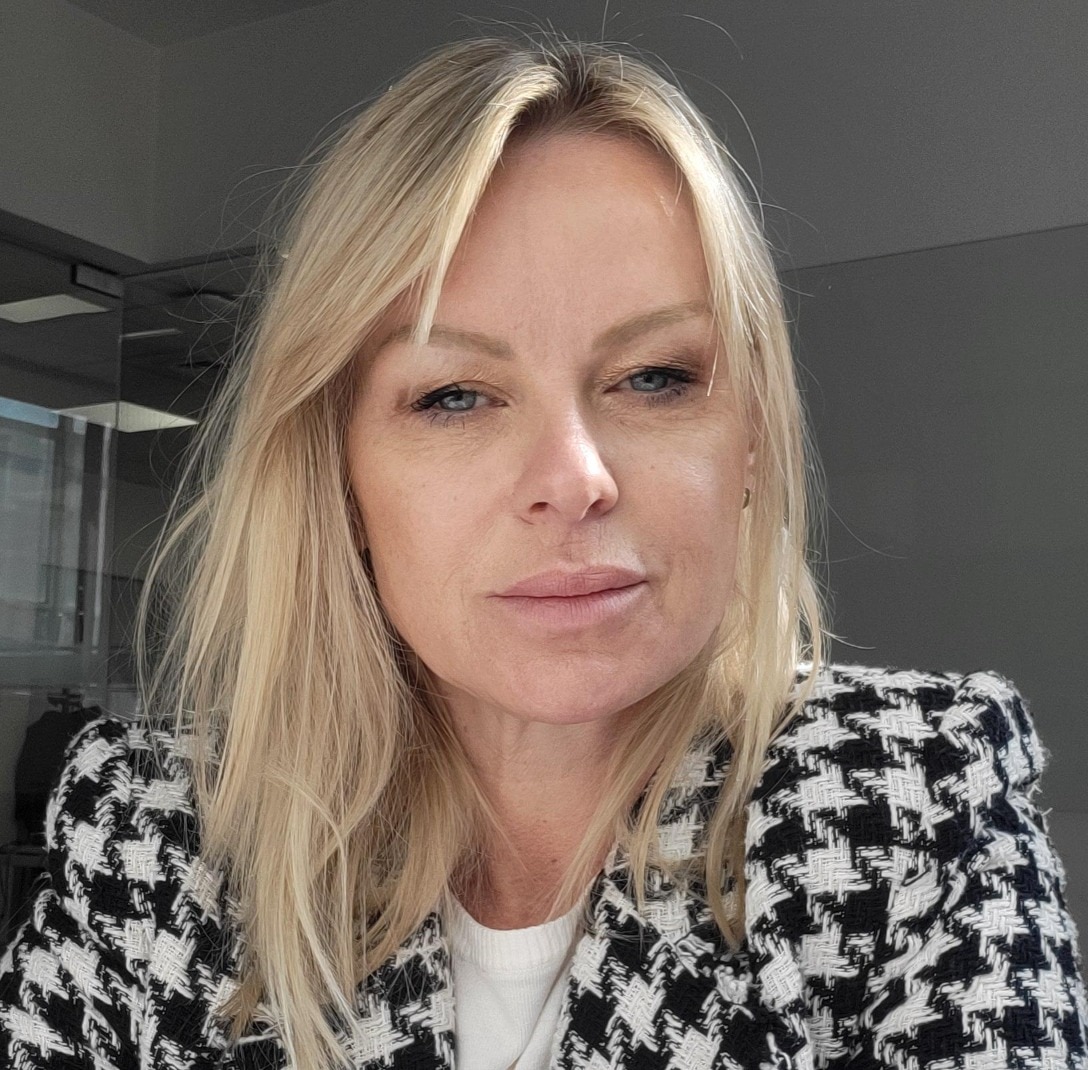
Eager to attract more global investment, Chile is not only doubling down on nuam, a regional stock exchange integration initiative, but also modernizing its post-trade processes. Marcello Topa, Global Head of Advocacy Investor Services at Citi, speaks to Vanessa Ringwald, Securities Services Head at Banco de Chile – a long-standing partner and majority-controlled institution in Citi’s network – about Chile’s packed market reform agenda.
Marcello Topa |
Vanessa Ringwald |

Topa: Regional stock exchange consolidation has been a long-held ambition for many emerging markets, but Latin America is now implementing it. How is nuam progressing, and what tangible benefits will the initiative bring to Chile?
Ringwald: nuam has a lot of momentum behind it. In 2023 – coming just three years after the project was first announced – the stock exchanges of Chile (Bolsa de Santiago), Peru (Bolsa de Valores de Lima), and Colombia (Bolsa de Valores de Colombia) merged their operations into a single holding company – nuam – based in Santiago.
The integrated exchange is supported by a unified trading platform operated by Nasdaq MME, which will provide investors with a single point of access to trade equities and derivatives, with fixed income due to come online in Q1 2028.1 If successful, nuam will unlock much-needed liquidity benefits for issuers and investors across all three markets.
This comes after a study by Nasdaq and the ValueExchange found that while 84% of global buy-side firms want to grow their Latin America exposures, 59% said market structure-related challenges often blocked or limited their investments.2
Topa: nuam is not Latin America’s first attempt at stock exchange integration. Why did the previous effort come to nought and what lessons have nuam’s leadership learned from this experience?
Ringwald: Earlier attempts to integrate different stock exchanges in Latin America have struggled to deliver positive results.
The Mercado Integrado Latinoamericano (MILA) exchange tried to consolidate the stock exchanges of Chile, Colombia, Peru and Mexico into a single entity 15 years ago, but trading volumes never materialized. Limiting factors included the lack of tax treatment harmonization, regulatory arbitrage, and an absence of a common currency across the four markets.
However, MILA was not a true structural integration in the way naum is; it was merely a linkage for brokers. Under MILA, an investor in, say, Mexico could purchase equities listed in Chile via a Chilean broker, but the custody, clearing and settlement all took place in Mexico. nuam’s proponents have recognized that stock exchange integration is only workable if post-trade integration happens simultaneously.
Topa: It appears that the architects of nuam are allocating a lot of resources to post-trade reform. What steps are they taking here?
Ringwald: In March 2026, nuam centralized international custody for Colombia and Peru at the Chilean Central Securities Depository (DCV), creating a common architecture across the three markets.3 CSD connectivity has also been a strategic priority at nuam. In 2025, each of the local CSDs confirmed they would adopt Nasdaq’s CSD technology platform to optimize post-trade processing. This will facilitate both closer CSD interoperability and better standardization, reducing some of the barriers and costs of cross-border investing. It is expected this common CSD infrastructure will be operational from Q2 2027.4
While Chile, Colombia and Peru do not share a common currency, a workaround has been established that allows investors to now settle trades on nuam in USD as well as in their local currency.
Although regulations across the three countries are not yet fully harmonized, nuam has adopted a single, regulator-approved Unified Operations Manual.5 This standardizes market practices, such as trading hours, to ensure they are broadly consistent and creates a more frictionless investment experience.
Topa: We have talked extensively about trading and settlement on nuam, but clearing seems to be the weak link in the chain. How are markets overcoming this challenge?
Ringwald: nuam has achieved integration levels of roughly 70% – an excellent milestone, but still a work in progress.
For trading volumes on nuam to gain critical mass, the clearing systems need to be fully interoperable and able to support real-time risk monitoring, margining and collateral management across each market’s Central Counterparty Clearing House (CCP).6 nuam is moving in the right direction and has been working closely with Vermiculus Financial Technology to develop an integrated cloud-native clearing system for Chile, Colombia and Peru.7
However, one stumbling block remains.
While both Chile (Contraparte Central de Liquidación de Valores) and Colombia (Cámara de Riesgo Central de Contraparte) have their own CCPs, Peru’s absence makes full interoperability within nuam unattainable.
Peru is building its own CCP, but the process is taking time, prompting some experts to speculate that Chile and Colombia may push ahead with their own CCP interoperability plans without Peru.
Topa: Securities lending is an area of intense focus in Chile. Can you provide an update on how the market is developing?
Ringwald: As nuam matures, so too will securities lending practices in Chile (plus Colombia and Peru). In October 2025, nuam joined the International Securities Lending Association (ISLA) Americas, underlining its commitment to global securities finance standards. Banco de Chile is a keen advocate of securities lending reform in Chile. During the various securities lending working groups, Banco de Chile has repeatedly identified the areas which need improving in the local market, including collateral management practices and beneficial owner reporting.
Topa: Chile is modernizing its post-trade processes. How are local providers enhancing some of their settlement practices?
Ringwald: Banco de Chile has been building connectivity channels with DCV via Application Programming Interfaces (APIs) so market participants can retrieve information about settlement updates without manual intervention. Together with reducing processing and reconciliation workloads, the Straight-through-Processing (STP) benefits will also help users mitigate risk. This settlement solution has already been successfully piloted with Banchile, the brokerage arm of Banco de Chile, and we expect to roll the service out more widely to clients between 2026-2028.
Topa: How are these settlement enhancements positioning Chile for T+1?
Ringwald: The automation of settlement processes is a welcome development ahead of T+1’s introduction in Chile.
These STP capabilities should put the industry on a strong footing when nuam migrates to T+1, which is purportedly happening in H2 2027, mirroring the European transition. However, some observers believe this timeline is ambitious. A successful migration to T+1 is contingent upon full post-trade integration across all three markets, which will not be possible until Peru has established a CCP. Again, some experts have suggested Chile and Colombia may decide to bypass Peru altogether and adopt T+1.
1 Thomas Murray – January 2026 – Risk Committee Update: January 2026
2 Nasdaq – LATAM markets poised for growth if key infrastructure changes are made
3 DCV – April 13, 2026 – Nuam centralizes international custody matters for Peru and Colombia at the DCV
4 Thomas Murray – January 2026 – Risk Committee Update: January 2026
5 nuam – CMF approves the new operations manual
6 Vermiculus Financial Technology – February 27, 2024 – Nuam exchange and Vermiculus Financial Technology establish partnership to create technological core for central counterparty clearing houses in Chile, Colombia and Peru
7 Vermiculus Financial Technology – February 27, 2024 – Nuam exchange and Vermiculus Financial Technology establish partnership to create technological core for central counterparty clearing houses in Chile, Colombia and Peru