
Big, Small and Everything in Between
HIGHLIGHTS
- Citi’s Payments business is defining the future of cross-border payments and global commerce, processing nearly $6 trillion daily
- Citi is strengthening its leadership in payments through core capabilities that enable clients to operate in an always-on, real-time global environment
- Citi is advancing its digital assets strategy through innovations like Citi Token Services, which provides integrated payments and liquidity services
How many times have you taken a cab and almost left the car without paying?
With the rise of ride-hailing apps, consumers have grown accustomed to a frictionless payment experience, where the payment is connected to the initial ride request and they no longer need to take out a credit card or cash.
But have you ever stopped to think about the complexity of how the payment went from your phone to the ride-hailing company and, eventually, on to your driver, almost instantly?
What most people don’t see is that a single ride represents dozens of transactions behind the scenes — from customer authorization to settlement and from platform fees to driver payouts — often across borders and currencies.
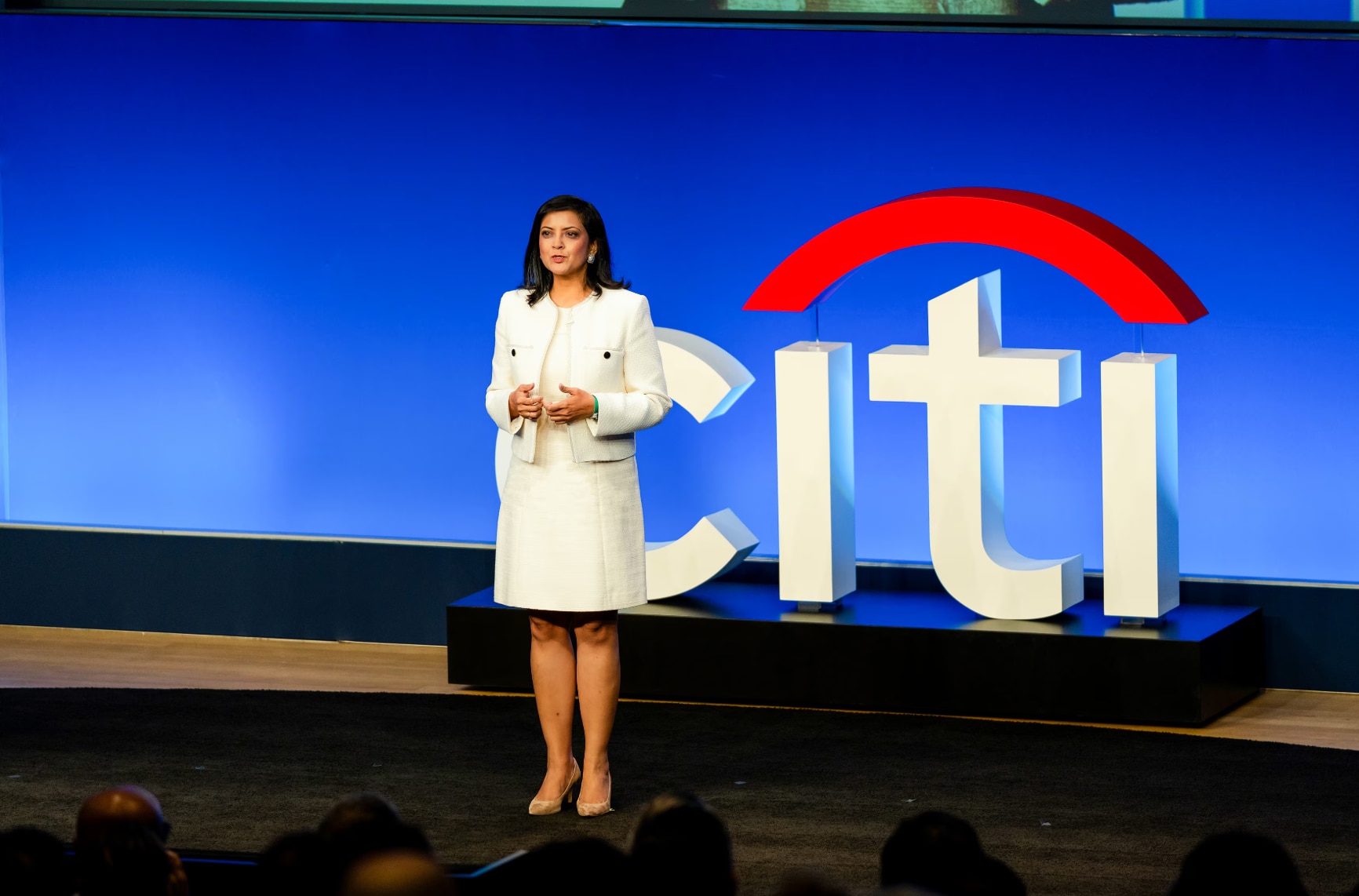
These are details Head of Payments Debo Sen and her team within Citi’s Services business spend hours solving for clients. “If you can’t provide those frictionless experiences, you’ll lose your consumers,” Debo says.
The Payments business includes an industry-leading cross-border network, domestic payments and payment acceptance, clearing, banking as a service and commercial cards.
Over her nearly three decades with the firm, Debo has learned the ins and outs of Citi’s Services business, working across Payments, Liquidity Management, Investor Services and Trade Finance, in operational, regional and functional roles.
“Every time I say I want to push myself out of my comfort zone and throw myself into the unknown, Citi always says, ‘Go for it,’” reflects Debo. That mindset has taken her from India to Singapore over the years and then to New York City, when she was named Co-Head of Payments in 2021. Two years later, she was named the sole business head for Payments.
24/7, 365 days a year: The surge of small transactions
A major priority for Citi’s Payments business is helping clients operate in today’s always-on environment — 24 hours a day, seven days a week, 365 days a year. No matter if it’s a national holiday or after traditional business hours, Debo and her team ensure our clients can facilitate payments in real time across borders and currencies.
To give a sense of scale, the Payments team processes nearly $6 trillion payments daily. In 2025, cross-border transaction volumes grew by 12%, delivering consistent double-digit growth in a landscape where Citi already leads the industry. Also in 2025, Citi’s Services business grew revenues by 8% from 2024, helping us maintain our rank as the number one payments bank for institutional and corporate clients.
That doesn’t mean Debo and the team are getting comfortable in the top spot. They’re focused on strengthening core capabilities — like 24/7 USD Clearing (live with 300-plus banks globally) and our cross-border payments network with integrated foreign exchange in more than 135 currencies — while also building for the future.
For instance, the speed of payments is increasing. They are becoming smaller, faster and more frequent. Alongside traditional corporate flows — such as a multinational company facilitating payroll for its employees across several countries — clients are managing millions of smaller transactions: payments to online influencers, gig-economy wages, in-app purchases and subscription billing. That shift is fundamentally changing how businesses think about scale, liquidity and connectivity.
“Supply chains are moving online. Customers are moving online,” Debo says. “Our clients are suddenly interacting with very different sets of supply chains that are much more digital and they’re dealing with consumers directly at a much larger scale.”
Citi® Payments Express, for example, executes small transactions at scale for clients like e-commerce companies that serve everyday online shoppers. Payments Express now processes up to 10 million payments a day across 22 global markets, representing nearly 40% of our total payment volume. Total payment volume, on average, has approached 20 million transactions per day.
And there’s also opportunity in places you might not expect.
A few years ago, an auto manufacturer would make a car and sell it to a dealer, never interacting with the end-consumer. Today, these companies interact directly with the consumer, sometimes through innovative subscription models or in-car payments for services such as Wi-Fi, offering them the speed, transparency and choice they crave in an always-on world. And when it comes to large-scale purchases, with today’s 24/7 marketplace, shoppers don’t have to wait for the dealership to open to buy a customized car. Now, the purchase can be made from a personal device, and Citi’s Payments team ensures our clients can process these payments any time of day.
The next frontier: Digital assets
As digital assets have captured headlines in recent years, Citi’s response is to lead on infrastructure. Our forward-looking strategy is already in motion with innovations like Citi Token Services, a cornerstone of the bank’s digital asset offering, which provides integrated payments and liquidity services that recently expanded to transactions in euros.
Through Citi Token Services, Citi is also collaborating strategically with other industry players. A prime example is the collaboration with Coinbase, announced in October 2025, which is designed to enhance the bridge between traditional and digital finance through on and off ramps for all major stablecoin providers. “Our collaboration with Coinbase is a natural extension of our digital assets strategy, providing clients with a single gateway to digital commerce globally as if there were no borders,” Debo says.
By managing the full spectrum of payments end-to-end, from massive cross-border corporate flows to the burgeoning world of micro-transactions and digital assets, Citi is not just facilitating commerce — it's defining the future of commerce.