A Civic Mindset as a Global Advantage
KEY HIGHLIGHTS
- As Head of Enterprise Services & Public Affairs at Citi, Ed Skyler applies the leadership, operations and stakeholder engagement experience he gained as a deputy mayor of New York City to his corporate portfolio
- Ed has helped turn strategic partnerships and investments such as Citi Bike and the Citi Impact Fund into lasting business and community impact
- Through periods of geopolitical and economic uncertainty, Ed has shaped Citi's response to global events while keeping the firm focused on its clients, colleagues and long-term priorities
In an era where corporate executives often oversee closely related verticals, Ed Skyler’s Enterprise Services & Public Affairs (ESPA) portfolio at Citi resembles something closer to a bustling municipal district.
The diverse remit spanning communications, community investing, real estate, aviation and more has grown organically around the unique capabilities of the man occupying it. It is a role that demands a rare combination of operational muscle and managerial instinct — a combination Ed forged in the crucible of City Hall, where he became the youngest deputy mayor in New York City history at age 32. In Ed’s case, managing a global systemically important bank's physical and reputational footprint is the corporate translation of running a city that never sleeps.
“Government, for all of its challenges, can move pretty fast when it wants to. You can devote a lot of resources to a problem quickly, and government has the muscle memory to keep doing that on a repeated basis,” says Ed. In a company like Citi, however, “In some ways, there is a more complicated layer of stakeholders and accountability. You’re much more constrained about what you can take on at any given moment.”
As Ed navigates a broad roster of internal and external stakeholders and challenges, his common-sense approach to solving tough problems has proven highly effective within Citi, and on behalf of Citi on the world stage.
A diverse public service portfolio
A native New Yorker, Ed got his start in city government in the NYC Parks Department, where he rose from a staff assistant to public information head. By day, he built relationships with local media and led public relations for parks, recreation centers, pools and beaches throughout NYC’s five boroughs. By night, he studied at Fordham University School of Law. And, while he wrapped up his law degree, he accepted a role at City Hall, joining former Mayor Rudolph Giuliani’s administration as deputy press secretary.
Ed pivoted to the private sector in 2000, taking a job at financial information and media firm Bloomberg LP. Less than a year after he joined, founder Michael R. Bloomberg decided to run for mayor. Ed, who sat 20 feet away from Bloomberg at the time, quickly got swept into the campaign.
Bloomberg won the election two months after the 9/11 terrorist attacks. When he took office in January 2002, Ed returned to City Hall as the mayor’s press secretary. The city was facing economic, fiscal and public safety challenges in the aftermath of 9/11 and many doubted New York’s future. As the Bloomberg administration guided the city’s recovery, Ed earned a reputation as a staunch defender of the mayor, while remaining honest and open with his boss. This approach strengthened trust with the mayor and cemented Ed as a key advisor. When Mayor Bloomberg was re-elected, Ed was named a deputy mayor, ultimately overseeing 95,000 city employees, including the police, fire, sanitation and transportation departments.
Ed’s impact on government efficiency and effectiveness during the Bloomberg administration was significant and his responsibilities were wide-ranging. He negotiated four consecutive balanced and on-time city budgets. He backchanneled with the president of the police officers' union during tense labor contract negotiations. He successfully overhauled the Buildings Department after a rash of fatal construction accidents. And he played a critical role in shaping the city’s policy, funding and clinical response to the long-term health impacts of 9/11.
Cleaning up complex, sensitive issues in a high-pressure environment became Ed’s calling card and turned out to be great training for his return to the private sector.
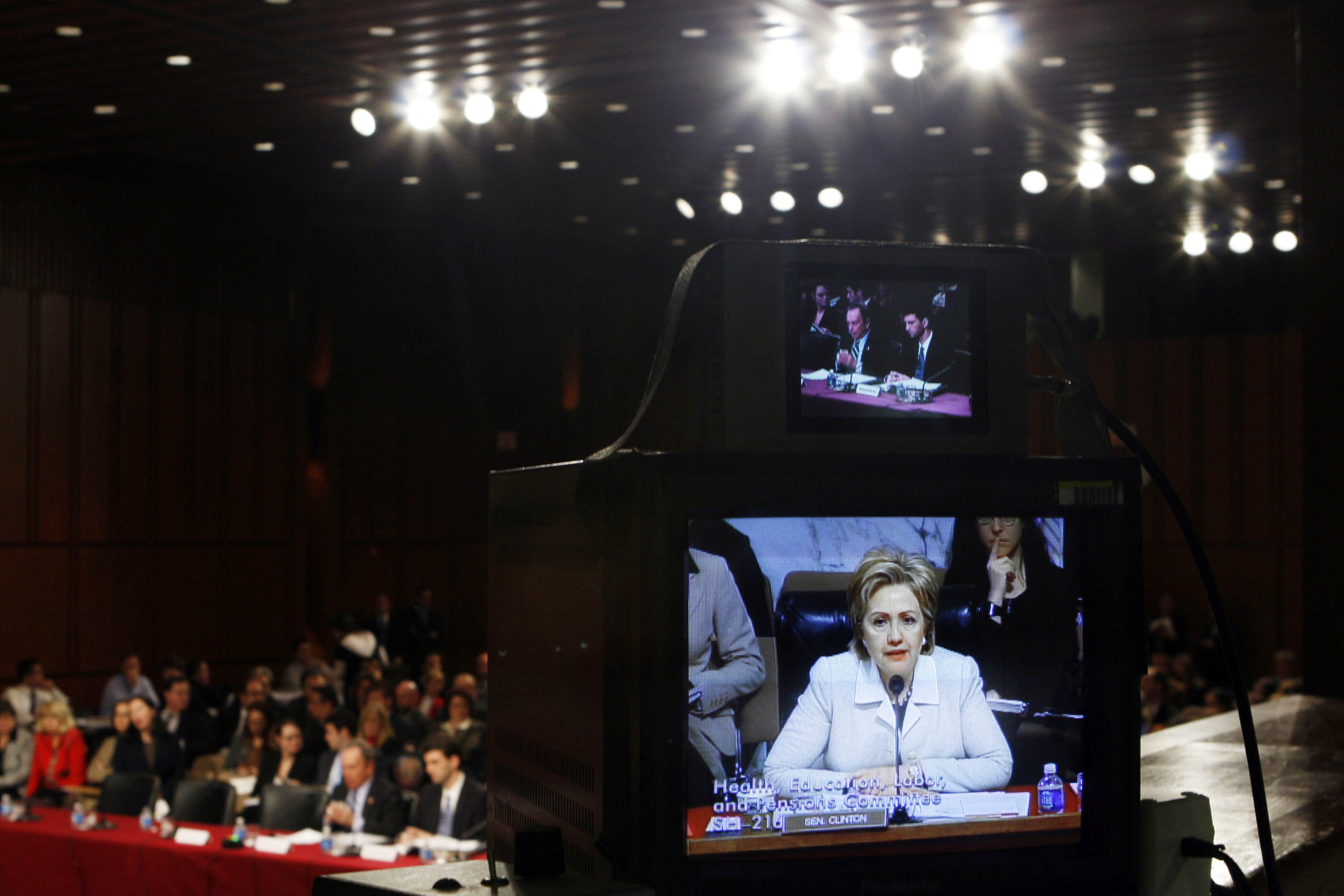
(Left) Then-U.S. Sen. Hillary Clinton (D-NY) questions panelists during a Senate hearing on the long-term health effects of 9/11 on March 21, 2007. Ed is visible at the table and in the camera viewfinder. Source: Getty
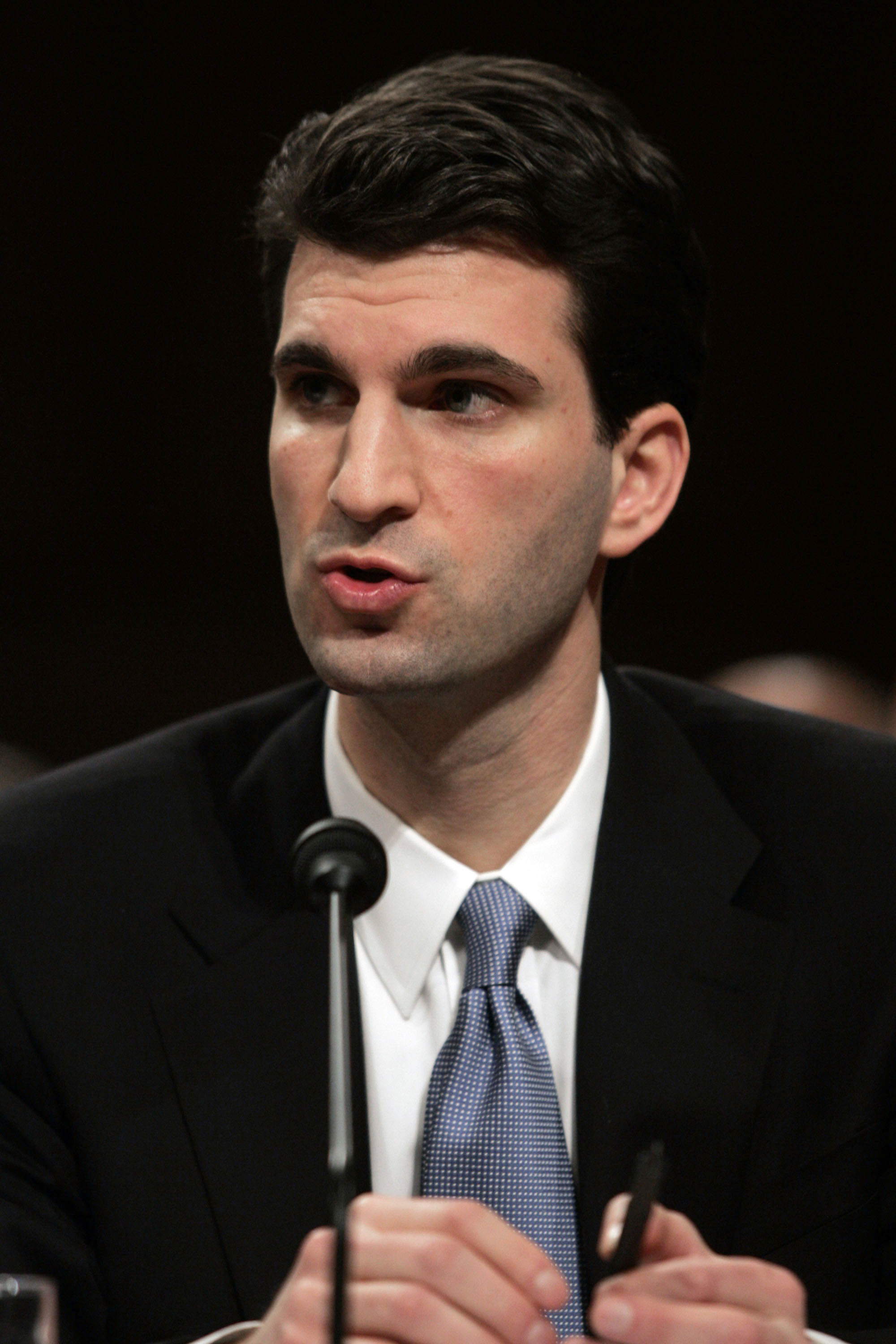
(Right) Ed testifying before the Senate Committee. Source: Getty
Navigating a global corporation
When Ed joined Citi in 2010 to lead Communications and share oversight of Government Affairs and Investor Relations, the company was dealing with the aftermath of the 2008 financial crisis. The U.S. Treasury Department still owned approximately 25% of the company and the firm had an uphill battle to regain credibility.
Over the years, his mandate at Citi has consistently expanded. His portfolio, unique in scope among peer firms, has grown from traditional public affairs to include enterprise-wide company operations that benefit from his full range of expertise, including Colleague & Client Services, Community Investing & Development, Real Estate Services, Sustainability and Aviation.
This range has allowed him to take on an array of initiatives.
Early on during his Citi tenure, Ed drew upon his City Hall experience as he negotiated Citi’s sponsorship of a bike-sharing program. Launched in 2013, “Citi Bike” has since become one of the company’s most effective marketing partnerships, serving as an essential part of the transit landscape and putting the Citi brand front and center, both on the ground and in the cultural conversation.
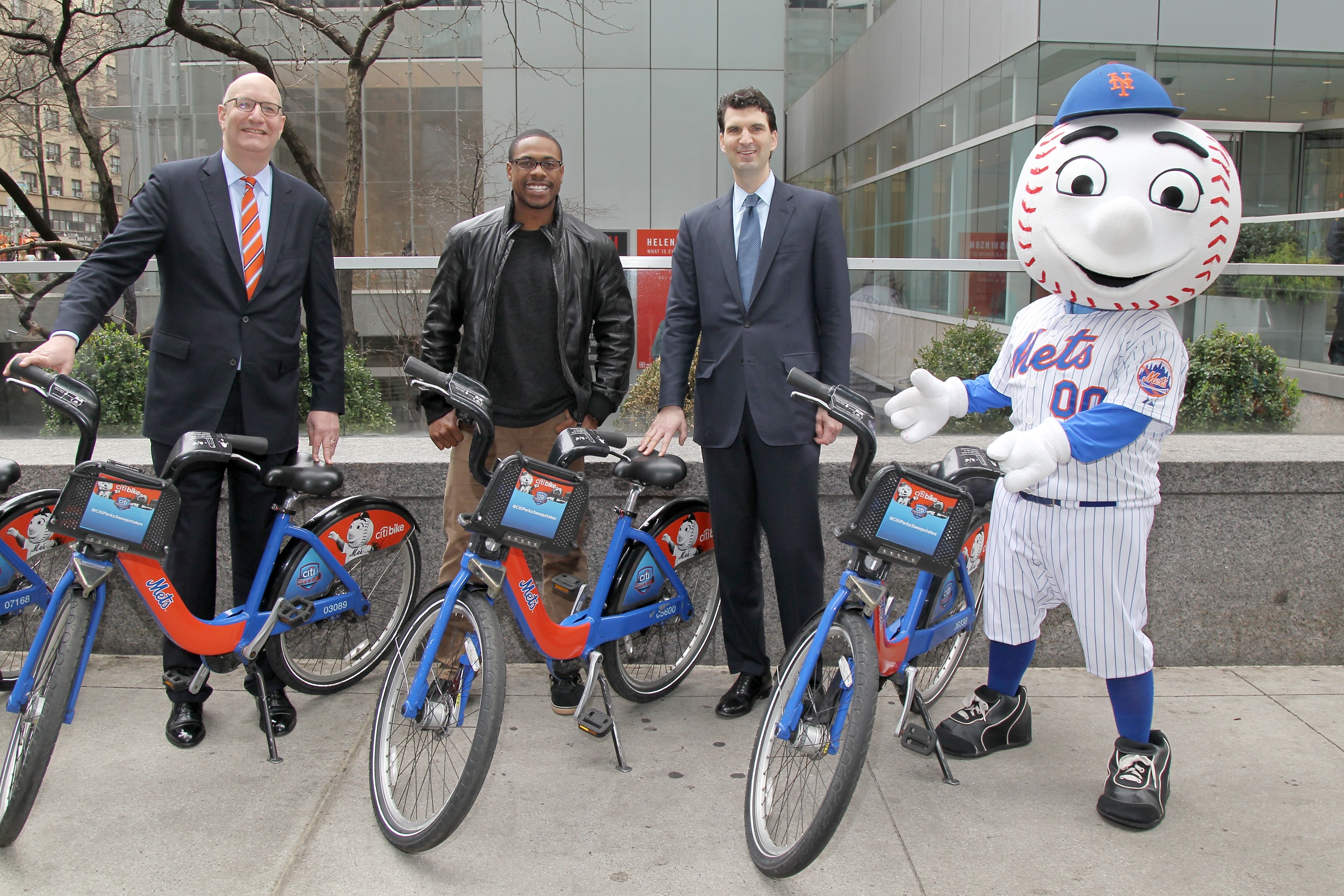
(From left) Motivate CEO Jay Walder, Mets outfielder Curtis Granderson, Ed and Mr. Met on April 7, 2016, in New York City. Source: Getty
In 2020, Ed spearheaded the creation of the Citi Impact Fund. The approach of leveraging Citi’s own balance sheet to make equity investments in “double-bottom line” companies that are developing innovative and sustainable solutions to community challenges was a new take on Citi’s community investing efforts, with potential for significant scale. The firm’s commitment has grown to $500 million and, to date, the Fund has invested in more than 58 companies and funds and allocated $215 million in capital. Citi was the first bank to make impact investments with its own balance sheet.
Earlier this year, the Citi Impact Fund announced it will invest $25 million in companies propelling innovative solutions for housing access, supply and affordability in the United States — part of Citi’s Blueprint for Housing Opportunity initiative, a $60 billion, five-year commitment to help finance the construction and preservation of at least 250,000 homes, and a $50 million commitment in philanthropic grants from Citi Foundation to nonprofits addressing housing challenges.
As the Executive Management Team sponsor for the Blueprint, Ed has drawn on his government experience to facilitate candid discussions on the real-world barriers and solutions for expanding housing access. He has also been advocating for Congress to update Low-Income Housing Tax Credits and make the tax dollars which support affordable housing go further.
“Housing needs the same spirit of innovation we've seen transform sectors like technology,” reflects Ed. “Progress will require collaboration, creativity and a willingness to think bigger. Given the energy and engagement we're seeing across sectors, I'm optimistic about what's possible.”
In recent years, oversight of Citi’s 25-million-square-foot real estate portfolio has been a key focus. In addition to executing timely projects like building out Citi’s new UK headquarters in London and European headquarters in Dublin, launching Wealth hubs in Asia and establishing post-separation locations for Citi Mexico, Ed and team have looked to the future of Citi’s footprint. They developed a proactive location strategy that seeks to align the footprint with Citi’s long-term strategic objectives — not just planning for where Citi is, but where its colleagues will need to be tomorrow.
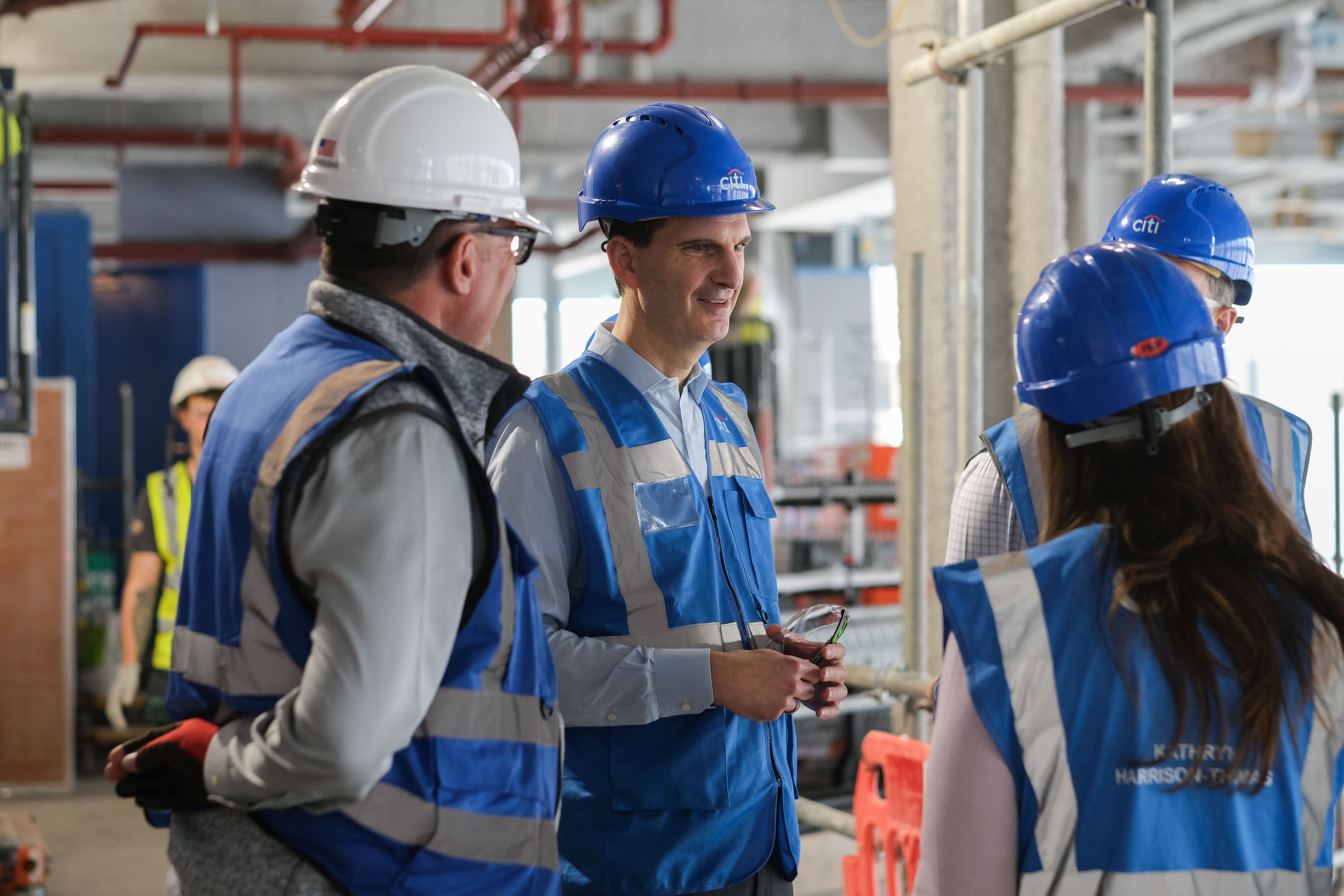
Ed (second from left) tours the construction site for Citi's Canary Wharf building in London in June 2026. Source: Citi
A pragmatic perspective
Since Ed joined the firm, there have been significant shifts in dynamics within the U.S. and across Citi’s global network. Ed has shaped Citi’s approach to complex conversations, including how the firm handled the COVID pandemic, the invasion of Ukraine, the conflict in the Middle East and other challenging geopolitical events.
When asked how he keeps perspective amid the volatile environment, Ed takes the long view.
“Part of making sure we keep moving forward is reminding ourselves that the company has been in existence for more than 200 years — through civil wars, world wars, depressions, financial crises and pandemics,” says Ed. “We've seen plenty of tumultuous times and we've gotten through all of them. We have to remember what it is that we do and consider, what's the best way that we can do it? And then advocate for our interests.”
Sixteen years into his role, Ed has had a seat on the Executive Management Team longer than any other leader within the firm. The range of opportunities and challenges he encounters in his role keeps him coming back for more. “What I love about Citi is its global reach and universal relevance.” He continues, “Whenever something big happens anywhere in the world, we’re impacted.”